If you want to scale your fitness business but feel stuck between £5k and £10k, you aren’t alone. You’ve done the hard work. You’ve got the certifications. You’ve spent years on the gym floor grinding out sessions from 6 AM until 9 PM. You’ve even built a decent reputation in your local area. But for some reason, you cannot seem to break through to the next level.
You’re likely using a mix of these outdated tactics:
- Posting randomly on Instagram hoping a “viral” reel will bring in leads.
- Waiting for the phone to ring because “word of mouth” is your only strategy.
- Offering huge discounts just to get people through the door.
- Trading every single hour of your life for a fixed hourly rate.
Here’s the problem: Your current growth isn’t a strategy, it’s an accident.
Most personal trainers and studio owners are running a “Hustle and Hope” model. You hustle for clients, and you hope they stay. You hustle for referrals, and you hope they happen. But here’s what’s really happening instead: referrals usually happen by accident in most PT businesses. This is why growth feels random. This is why revenue keeps wobbling between good months and bad months. Inconsistent growth is a structural failure, not a lack of effort.
WHAT: The ‘Accidental Growth Trap’ Stopping You From Being Able to Scale Your Fitness Business
The Accidental Growth Trap is what happens when your business grows just enough to look healthy—but not enough to give you freedom.
You get clients through effort. You keep them through personality. You pick up referrals through luck. And because money still comes in, you assume the structure is working.
It isn’t.
Here’s the problem: inconsistent growth is a structural failure. Not a motivation problem. Not an algorithm problem. Not a “need to post more” problem.
It’s a systems problem.
Most trainers stuck between £2.5k and £5k a month are running what I call the Hustle & Hope model:
- Hustle for leads by posting, chasing DMs, and relying on visibility spikes.
- Hope people convert because they “seem keen” on a consult.
- Hope clients stay because you’re delivering a good service.
- Hope referrals happen because people like you.
That isn’t growth. That’s drift.
And drift feels productive right up until you hit the wall.
What’s happening instead:
You are probably seeing some of these signs:
- Revenue jumps and dips with no obvious pattern.
- Lead flow goes quiet the second you stop posting.
- Referrals appear randomly instead of predictably.
- Your business depends on your energy far more than any system.
That is the Workhorse Trap.
You become the engine, the fuel, and the mechanic. You work harder. The business stays fragile. And the minute life gets messy, your revenue wobbles.
That isn’t a growth issue. It’s an architecture issue.
If you want to know exactly where the structure is cracking, start with the audit.
Check your Growth Engine Health with the 2-Minute Scorecard.
https://cdn.marblism.com/g8VCBNy273a.webp
The first step to breaking the plateau is diagnosing the structural cracks in your foundation.
WHY: Trainers Hit the £2.5k-£5k Wall Because They Become the Bottleneck
Why does the business feel heavier once you hit that £2.5k-£5k range?
Because the very thing that got you here is now the thing keeping you stuck.
If you want to scale your fitness business, that should worry you.
In the early days, hustle works. You can outwork weak systems. You can remember every lead in your head. You can manually follow up. You can patch over gaps with long days and caffeine.
Those days are long gone.
And if you still want to scale your fitness business, you cannot keep operating like it’s still day one.
1. The Energy Cap Kills Momentum
You can only coach so many hours before quality drops.
When quality drops, follow-up slips. Content slips. Admin piles up. Then retention gets shaky. Then revenue stalls.
This is the energy cap. Your income is tied to your physical output, so growth becomes painfully limited.
That means every attempt to scale your fitness business gets crushed by your calendar first.
2. Decision Fatigue Destroys Strategic Thinking
You’re making every decision.
Pricing. Follow-up. Scheduling. Late payments. Client messages. Programme tweaks. Content ideas. Renewals.
Small decisions steal big energy.
And when your brain is stuck handling £50 problems all day, you never build the systems that solve £5,000 problems.
You do not scale your fitness business by becoming the busiest person in it.
How to Scale Your Fitness Business by Removing the Technician Bottleneck
Most trainers are brilliant technicians.
They can coach. Correct form. Motivate. Deliver results.
But businesses don’t scale because the owner is technically good. They scale because the owner stops acting like the entire machine.
If you want to scale your fitness business, this is the shift that matters most.
If every lead needs you, every sale needs you, every check-in needs you, and every client issue lands on your phone, you are not building a business.
You are trapped in the Workhorse Trap.
And you will never scale your fitness business predictably whilst you are still the bottleneck.
Becoming a Growth Architect
This is where the shift has to happen.
A Growth Architect doesn’t rely on heroic effort. They build the structure once, then let it do the heavy lifting repeatedly.
That is how you create Transferable Revenue—revenue that doesn’t disappear the second you take a day off.
That is how you start Finding Your Freedom—not by working less immediately, but by building a business that stops leaning on your neck for survival.
If your business still depends on you remembering everything, chasing everything, and fixing everything, you don’t need more hustle.
You need better architecture.
Check your Growth Engine Health with the 2-Minute Scorecard.
HOW: Use the Growth Engine OS to Scale Your Fitness Business Predictably
To break the plateau, you must move from accidental growth to engineered growth.
That is exactly what the Growth Engine OS is built to do.
If you want to scale your fitness business predictably, you need one engine that removes guesswork from growth.
One engine—multiple vehicles. Depending on your stage, the same system applies whether you’re a solo PT, a studio owner, or building across multiple locations.
The Growth Engine OS is built on three pillars:
- Predictable Demand
- High-Performance Conversion
- Industrial-Grade Retention
Miss one, and the whole engine misfires.
Pillar 1: Build Predictable Demand to Scale Your Fitness Business
If I asked you how many qualified leads you’ll get next Tuesday, could you answer clearly?
If not, demand is still random.
That means you’re still leaning on Hustle & Hope.
You cannot scale your fitness business on random demand.
Predictable demand means you stop waiting for luck, random Instagram reach, or a surprise referral from a happy client. Instead, you build visibility around real buyer problems and create a repeatable route into your world.
That is why you need fitness marketing strategies built for 2026—not vanity posting, not flexing online, not “consistency” with no commercial outcome.
Demand must be engineered. Otherwise everything downstream stays unstable.
Pillar 2: High-Performance Conversion Protects the Lead Flow You Already Have
A lead is not revenue.
A consultation is not revenue.
Interest is not revenue.
Revenue only happens when your sales process is clear, consistent, and strong enough to move the right person into the right offer.
If you want to scale your fitness business, your sales process cannot depend on mood, memory, or momentum.
Most trainers don’t have a conversion problem because they are bad people. They have one because their process is loose.
They chat. They ramble. They avoid tension. They underquote. Then they tell themselves the prospect “wasn’t serious.”
Usually, the system wasn’t serious.
If you want to break through, you need a sales mastery playbook that helps you sell outcomes, not sessions.
Step 1: Stop improvising every sales conversation.
Step 2: Start selling Outcomes with a defined structure.
Step 3: Build follow-up that doesn’t rely on memory or mood.

Pillar 3: Industrial-Grade Retention Creates Transferable Revenue
This is where most fitness businesses leak money.
It is 5x cheaper to keep a client than to find a new one. Yet most owners still obsess over fresh leads whilst ignoring the clients already inside the business.
That is structural insanity.
Retention is not about being “nice.” It is not about checking in when you remember. And it is definitely not about waiting until someone goes quiet before doing something.
It has to be systematic.
That means tracking engagement. Flagging at-risk clients. Building milestone moments. Creating renewals on purpose. And using client retention as a commercial function—not just a service function.
If you want to scale your fitness business, retention has to become a growth system—not a reactive clean-up job.
What’s happening instead: engineered referrals
Here’s the shift most trainers miss: referrals should sit inside retention.
Not beside it. Not after it. Inside it.
Because the best referrals happen when a client has just won.
When they hit a milestone. When they renew. When they upgrade. When they tell someone about their result with emotion.
That means referrals engineered, not expected.
So instead of hoping people mention you, you install a Referral System:
- Trigger referral asks at specific client success moments.
- Track referral activity so it isn’t buried in DMs and voice notes.
- Reward advocacy without making your brand look desperate.
- Tie referrals to ascension so your best clients bring your best-fit leads.
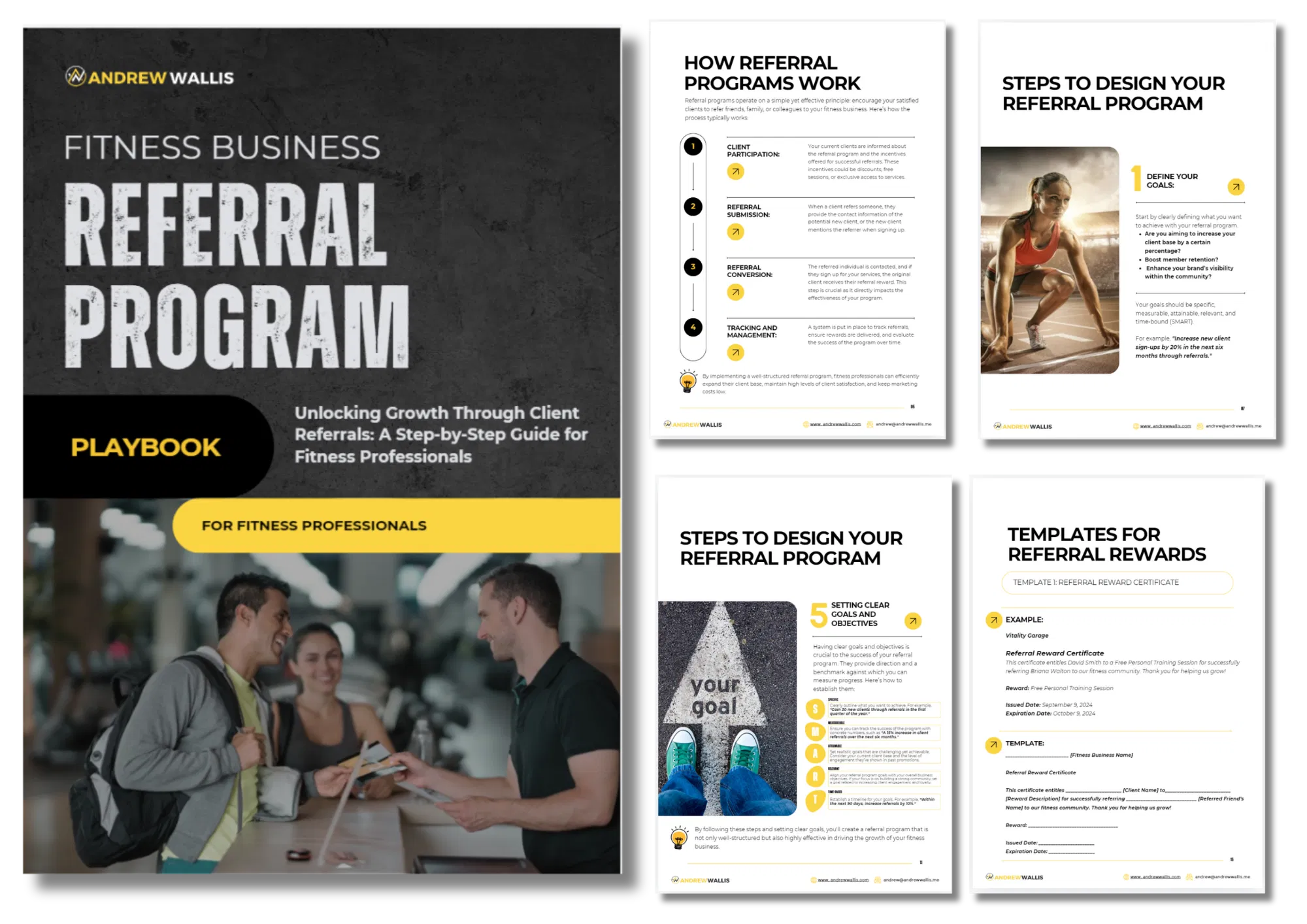
A referral program isn’t a “nice to have”—it is a retention and ascension system that turns happy clients into a predictable growth channel.
This is how you create a business that is less dependent on your daily hustle and more capable of generating Transferable Revenue over time.
Check your Growth Engine Health with the 2-Minute Scorecard.
NOW: The 30-Minute Audit You Need to Do This Week
You do not need another motivational podcast.
You need thirty focused minutes.
Not someday. Now.
Step 1: Take the Scorecard
Before you change anything, diagnose the real constraint.
Is your issue demand? Conversion? Retention? Referrals? Owner dependence?
Don’t guess.
Take the 2-Minute Growth Engine Scorecard and get your custom roadmap.
Step 2: Identify the Single Bottleneck
Once you get the result, pick the one area doing the most damage.
Not five areas. One.
If leads are weak, fix demand.
If consults don’t close, fix conversion.
If clients churn, fix retention.
If everything depends on you, you are still in the Workhorse Trap.
Use the Fitness Metrics Playbook to find the leak, the drag, and the missed opportunity.
Step 3: Block Time for System Building
This is the part most trainers skip.
They diagnose the issue, then go straight back to firefighting.
Don’t do that.
Block time in your calendar this week to build the missing system. Protect it like a client session. Because this is the work that gets you out of the chaos.
And if referrals are still random, stop calling that “word of mouth.” Install a proper Referral Program and build it into the client journey.
Step 4: Scale Your Fitness Business and Start Finding Your Freedom
Freedom is not about doing less because you’re tired.
Freedom is about building a business that stops collapsing every time you take your foot off the pedal.
That is the shift from technician to Growth Architect.
That is the path out of accidental growth.
That is how you build a Growth Flywheel that keeps spinning with less brute force.
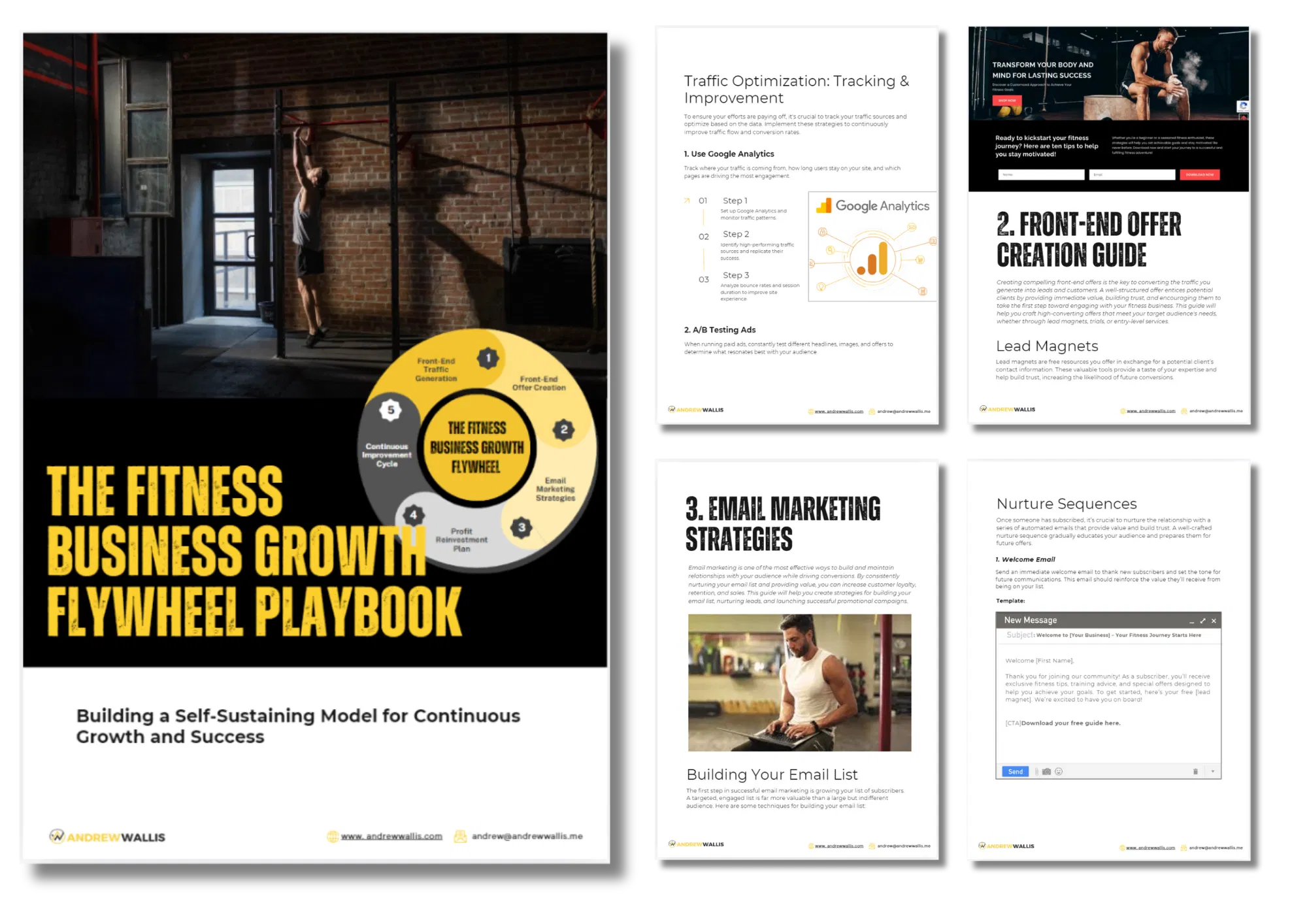
The Growth Flywheel: Once you build it, it takes less effort to keep it spinning.
Frequently Asked Questions (FAQ)
Why do most personal trainers struggle to grow past £5,000 a month?
Most PTs hit a ceiling because their growth is “accidental”—relying on personal energy and random referrals. To break past £5k, you have to shift from a “Hustle & Hope” model to a structured Growth Engine that doesn’t depend entirely on your manual effort.
How can I scale my fitness business without working more hours?
Scaling without burnout requires moving from a “Workhorse” (doing everything yourself) to a “Growth Architect” (building systems). By installing automated lead capture and structured follow-up, you create “Transferable Revenue” that stays stable even when you aren’t on the gym floor.
How do I get more personal training leads without using paid ads?
The most sustainable way to generate demand is to solve specific buyer problems through content and “Micro Magnets” rather than vanity posting. When you engineer your visibility around a clear offer, you create a predictable flow of inquiries without the cost of Facebook or Google ads.
What is the best way to get more referrals for my fitness business?
Don’t wait for referrals to happen by accident. You should “engineer” them by triggering referral asks at specific success moments—like when a client hits a milestone, renews their package, or upgrades their service. This turns retention into a proactive growth channel.
How do I stop fitness leads from ghosting or going quiet?
Leads usually go quiet because of a “loose” conversion process. By using a structured sales playbook and an automated nurture system, you stay top-of-mind and move prospects through a defined journey, rather than relying on your memory to follow up.
How can I improve client retention in my gym or studio?
Retention is a commercial function, not just a customer service one. Improving retention requires a systematic approach to tracking engagement, flagging “at-risk” clients early, and building milestone moments that make staying the obvious choice for the client.
Final Thoughts: The Choice is Yours
You can keep doing what you’re doing. You can keep “hustling” and wondering why the numbers don’t change. Or, you can decide to become a Growth Architect.
The market in 2026 doesn’t reward the “hardest worker.” It rewards the person with the best systems.
Are you ready to stop guessing?
Take the 2-Minute Growth Engine Scorecard and get your custom roadmap.
About Andrew Wallis Consultancy
Andrew Wallis is a business growth consultant who helps personal trainers, studio owners, and fitness professionals build the “Growth Engine” required to scale beyond the owner. By focusing on structural systems rather than “hustle,” Andrew’s frameworks have helped hundreds of fitness businesses move from stagnant to scalable.