

Mastering a structured fitness consultation process is the difference between a thriving business and a constant struggle for clients.
Let’s be honest. Most personal trainers and studio owners are winging the most important conversation in their business. You’re hoping your energy, your passion, and your knowledge will somehow carry the sale.
That’s not a process. That’s a gamble.
If your consultations feel inconsistent, you’re probably seeing:
- Unpredictable revenue because too many prospects stall or disappear.
- Weak buying intent because your meetings feel friendly, not professional.
- Price resistance because you present packages before building value.
- Low conversion rates because you don’t have a repeatable consultation structure.
Here’s the problem: a great consultation isn’t about pressure—it’s about process. Inside the Growth Engine OS™, the START (Conversion) pillar is built to help fitness businesses create a predictable flow from lead to paying client.
Depending on your stage, that same system applies whether you’re a solo PT, a studio owner, or managing a growing team. One engine → multiple vehicles.
Why Most Fitness Consultations Fail Before You Ever Mention Price
Most trainers think a consultation is about building rapport. That’s only part of it.
If you let the conversation drift, you lose control. If you talk too much, you miss the real problem. If you pitch too early, the price feels heavy. And if you don’t ask for the sale properly, the lead walks away with “I’ll let you know.”
Friendly isn’t enough anymore.
A professional consultation should move through a clear path:
- Discovery
- Problem Identification
- Solution Presentation
- Handling Objections
- Closing
That’s how trainers I work with stop relying on guesswork and start building predictable conversion. If you want the bigger picture, read The Ultimate Guide to Client Conversion.
Stop improvising. Start leading.

Step 1: Discovery — The Foundation of a Strong Fitness Consultation Process
The biggest mistake you’re making is trying to prove you’re good before you understand what they actually need.
Discovery is where you gather the facts. Not surface-level facts. Decision-making facts.
If a prospect says they want to “get fitter,” that tells you almost nothing. You need to understand:
- What they want
- Why they want it now
- What they’ve already tried
- What hasn’t worked
- What they’re truly expecting from coaching
This is where you slow down and listen. For PTs, that might mean unpacking a fat-loss goal, confidence issue, or failed attempt with another coach. For studio owners, it might mean understanding whether the prospect wants accountability, structure, community, or a more premium coaching experience.
If you want to sharpen this part of your fitness consultation process, it’s worth reviewing proven sales discovery questions from HubSpot and adapting them to your own style.
Your goal in Discovery is simple: make the prospect feel understood without rushing to fix them.
A few useful consultation questions:
- What made you book this today?
- What’s frustrating you most right now?
- What have you tried before?
- Why do you think it hasn’t worked yet?
- What would success look like over the next 6 to 12 months?
The person asking the best questions controls the consultation.
Not sure where your lead flow or sales process is leaking? Take the Growth Scorecard here and see what’s holding your business back.
Step 2: Problem Identification — Expose the Real Cost of Staying Stuck
Prospects rarely buy because of goals alone. They buy because staying the same starts to feel too expensive.
This is where most fitness consultations fall apart. You hear the goal, then jump straight into your programme. Too fast.
Here’s what’s happening instead: the prospect hasn’t fully connected with the cost of the problem. And if the problem doesn’t feel urgent, the solution won’t feel necessary.
You need to help them articulate:
- What the problem really is
- How long it has been going on
- What it is costing them physically, mentally, and emotionally
- What happens if nothing changes
For example:
- A PT prospect doesn’t just want to lose 10kg—they’re tired of starting over every Monday.
- A studio prospect doesn’t just want classes—they want accountability because training alone never lasts.
- A higher-ticket coaching client doesn’t just need programming—they need a structured plan they’ll actually follow.
When you identify the problem properly, price becomes part of the solution—not the centre of the conversation.
If you don’t diagnose the problem deeply, you’ll always sound expensive.
Step 3: Solution Presentation — Prescribe the Right Plan, Not Every Plan
This is where too many trainers start info-dumping like a brochure with legs.
Once the problem is clear, you present the solution. But not all your options. The right option.
Your consultation should never feel like a menu. It should feel like a prescription.
That means you connect your offer directly to the pain points they’ve already confirmed. You show how your coaching, studio membership, semi-private model, or premium package solves the exact problem they described.
A strong solution presentation should include:
- Their current problem in plain English
- The gap between where they are and where they want to be
- Your recommended plan
- Why this plan fits them specifically
- What outcomes they can realistically expect
For example, instead of saying:
“I offer 1:1 PT, online coaching, and a 12-week package.”
Say this:
“Based on what you’ve said, the real issue isn’t motivation—it’s structure and accountability. That’s why I’d recommend this coaching plan, because it gives you clear progression, regular check-ins, and support between sessions so you don’t keep falling off.”
That sounds professional. Because it is.
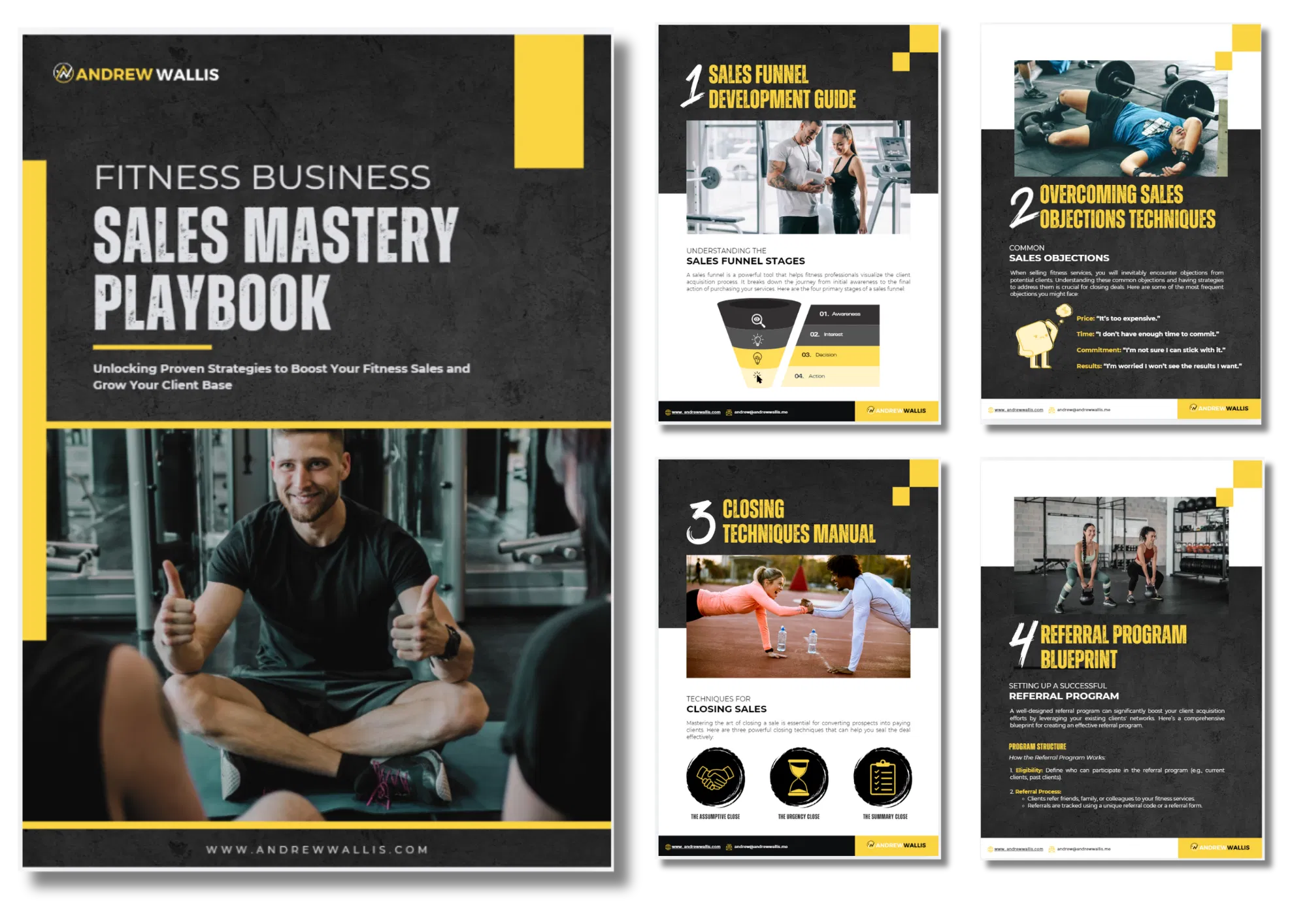
If your offer presentation feels clunky, your messaging probably is too. Use the Fitness Business Marketing Strategy Playbook to tighten up how you position your coaching before the consultation even starts.
Step 4: Handling Objections — Stop Defending, Start Clarifying
Objections don’t usually mean “no.” They usually mean “I’m not certain yet.”
Most trainers hear objections and panic. So they talk faster. Discount sooner. Or start over-explaining.
Bad move.
Objection handling is about identifying what’s really underneath the hesitation. Usually it’s one of four things:
- Money — They don’t yet see enough value.
- Time — They don’t believe they can follow through.
- Trust — They’re unsure you can help them.
- Readiness — They want the result, but haven’t fully committed.
Instead of arguing, ask better questions:
- When you say it’s expensive, compared to what?
- What part feels unclear to you?
- What would you need to feel confident moving forward?
- Is the issue the investment—or making this a priority?
This keeps the conversation honest. Professional. And grounded.
If you want an outside perspective on objection handling, this breakdown from Forbes on handling sales objections is a useful extra layer to study and apply to your own conversations.
For PTs and studio owners, this is a game-changer because most objections are not random. They are patterns. Which means they can be prepared for, documented, and improved over time.
The best closers don’t overpower objections. They neutralise uncertainty.
Step 5: Closing — Ask for the Decision Without Getting Weird
This is the moment most fitness business owners avoid—and it’s exactly why they stay stuck.
If you’ve done the first four steps properly, closing shouldn’t feel pushy. It should feel obvious.
You’ve discovered the goal. Identified the real problem. Presented the right solution. Clarified the hesitation. Now you need to ask for the decision clearly.
Not vaguely. Clearly.
Try simple closing language like:
- “Based on everything we’ve discussed, are you ready to get started?”
- “Do you feel this is the right plan for you?”
- “Shall we lock in your first session and get this moving?”
Then stop talking.
That silence? That’s where a lot of sales are won. Trainers lose it because they rush in and rescue the prospect from making a decision. Don’t do that.
And once they say yes, move straight into the next step:
- Take payment
- Book the first session or onboarding
- Send the welcome message
- Create immediate momentum
That’s how the START pillar feeds the rest of the Growth Engine. Better consultations lead to better clients. Better clients lead to better retention. Better retention creates real leverage.

Pathway 2: For the PT Stuck at £2.5k–£5k
If you’re hovering in that £2.5k–£5k range, there’s a good chance the problem isn’t lead volume. It’s conversion discipline.
You may already be getting DMs, enquiries, referrals, and trial bookings. But if your consultation process is loose, inconsistent, or overly casual, those leads won’t convert at the rate they should.
Here’s why:
- You’re answering questions instead of leading the consultation
- You’re pitching sessions instead of solving problems
- You’re reacting to objections instead of anticipating them
- You’re ending with “let me know” instead of asking for the sale
That’s not a lead problem. That’s a consultation problem.
Depending on your stage, the same conversion system works whether you deliver 1:1 coaching, semi-private PT, or premium studio memberships. One engine → multiple vehicles.
Summary: Mastering Your Fitness Consultation Process
The perfect fitness consultation is not about being slick. It’s about being structured.
- Discovery: Understand what they want and why they want it.
- Problem Identification: Show the real cost of staying stuck.
- Solution Presentation: Recommend the right offer with confidence.
- Handling Objections: Clarify hesitation without becoming defensive.
- Closing: Ask clearly and move into action fast.
That is what the START (Conversion) pillar is built for.
If you keep treating consultations like casual chats, your revenue will stay inconsistent. If you build a proper conversion process, you create a business that grows without relying on luck, mood, or “good months.”
Want to know where your conversion process is weakest? Get your Growth Scorecard and find the bottleneck.
FAQ: Understanding the Perfect Fitness Consultation Process
What is a fitness consultation?
A fitness consultation is a structured sales conversation where a PT, studio, or gym owner uncovers a prospect’s goals, identifies their real problems, recommends the right solution, handles concerns, and asks for the sale.
Why do fitness consultations fail?
Fitness consultations fail because most trainers talk too much, diagnose too little, present offers too early, and never lead the conversation with a clear process.
What should happen during a PT consultation?
A PT consultation should move through Discovery, Problem Identification, Solution Presentation, Handling Objections, and Closing so the prospect feels understood and guided—not pressured.
How do you handle objections in a fitness sales consultation?
Handling objections in a fitness sales consultation is about clarifying the real hesitation behind concerns like money, time, trust, or readiness, then resolving uncertainty with confidence.
How do I improve my consultation close rate?
You improve your consultation close rate by asking better questions, diagnosing problems more deeply, presenting the right offer more clearly, and asking for the decision directly.
Ready to see how your business stacks up against the best in the industry?
Take the Growth Scorecard now. It takes less than 2 minutes and will give you a personalized report on exactly where your “leaky buckets” are.

