

Are you still looking outward for growth—when the most valuable opportunities for inactive client reactivation are already sitting in your phone?
Most PTs look in the wrong direction first.
They look at cold traffic. More content. More reach. More strangers.
But if you’ve been coaching for any length of time, your next wave of revenue usually doesn’t come from the algorithm. It comes from relationship equity—the trust, familiarity, and goodwill you’ve already built with former clients, old leads, and people who once nearly started.
That’s the asset most trainers ignore.
And in 2026, that asset matters more than ever.
Why Traditional Marketing Fails for Inactive Client Reactivation
Let’s be honest. You’re likely doing one of the following:
- Creating endless reels whilst your former clients quietly disappear.
- Posting educational content every day but still wondering why nobody actually messages you.
- Sending cold DMs to people who don’t know you, hoping volume will make up for weak trust.
Here’s the shift: stable growth usually starts with people who already know your name.
Success in this business isn’t just about reach. It’s about relevance, timing, and trust. If you need to create revenue quickly and sensibly, you probably don’t need another funnel. You need a clear reactivation process built on relationship equity.
The Core Principle of Inactive Client Reactivation: Relationship Equity
Before we get into scripts or sequencing, we need to set the frame.
This is not really about marketing. It’s about reconnection.
If you send a generic promo, a last-minute offer, or a message loaded with panic energy, people will feel it immediately. Not because they’re difficult—because they’re human. And when someone has drifted away from training, aggressive messaging usually creates more distance, not less.
The goal here is simple:
- Restart a conversation.
- Reduce psychological resistance.
- Create a natural path back into coaching.
Everything you send should feel considered, human, and easy to respond to. The best reactivation work doesn’t feel like a funnel. It feels like a coach paying attention.
Why Relationship Equity Beats Algorithm Dependency for Client Retention
Cold attention is getting noisier.
AI is flooding the market with decent-enough content. Feeds are more crowded. Search is changing. Social platforms are less predictable. And most fitness professionals are competing in the same attention auction with the same recycled hooks.
That creates a problem.
When everybody can produce content quickly, trust and familiarity become more valuable than visibility alone.
That’s why relationship equity matters. If someone already knows you, remembers working with you, or nearly joined before, you’re not starting from zero. You’re building from existing context. That shortens the gap between interest and action.
This is the bigger strategic point.
If your business only grows when the algorithm behaves, then your growth is fragile. But if you build on trust, conversation, and systems, your growth becomes far more stable.
This is the thinking behind what I call the Growth Engine: building stable growth systems that don’t depend entirely on algorithms, panic marketing, or constant content churn.
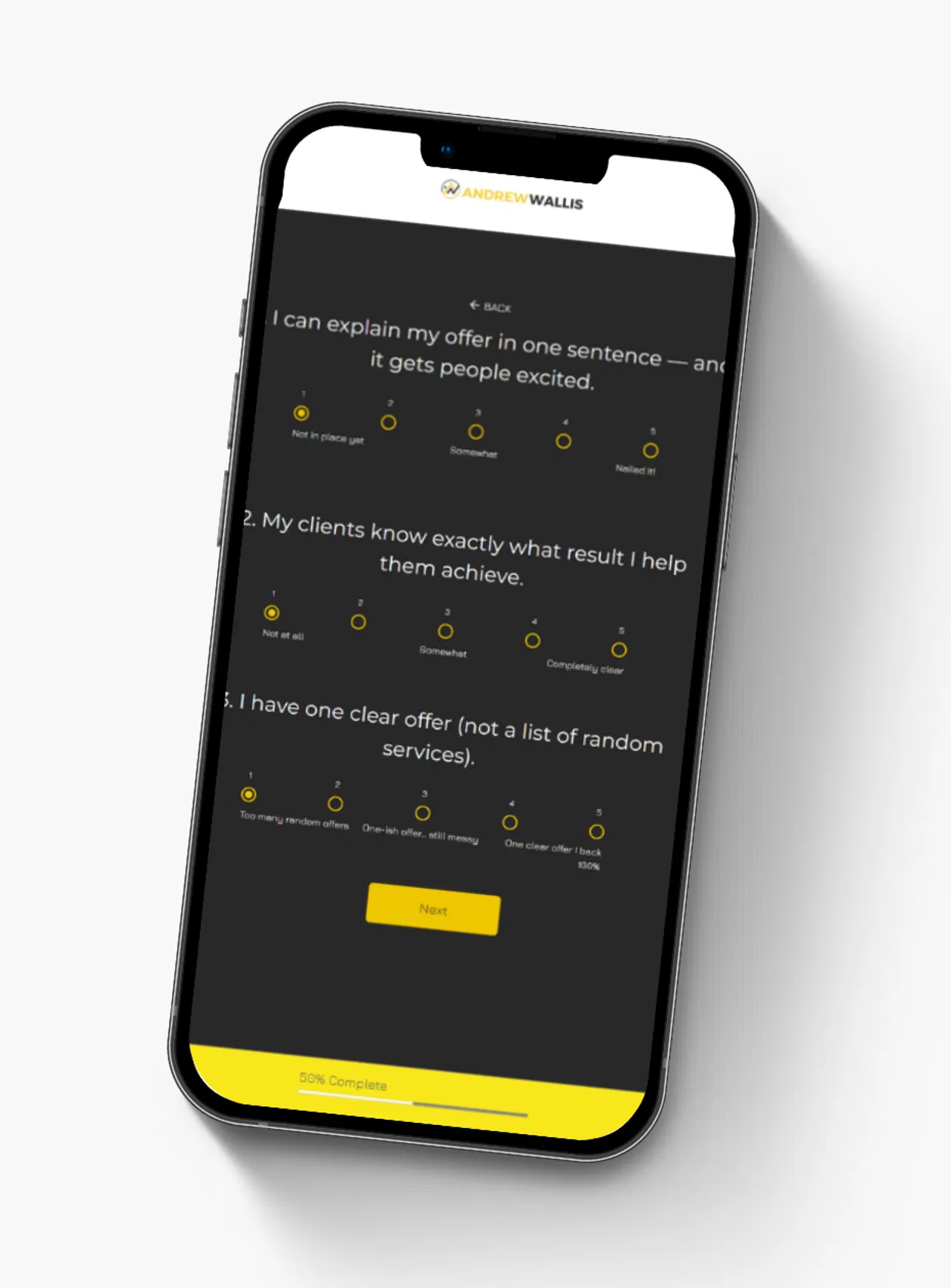
Check your Growth Engine Health with the 2-Minute Scorecard.
A Tiered Strategy for Successful Inactive Client Reactivation
You cannot treat someone who paused last month the same as someone who hasn’t trained in a year.
Time matters. But psychology matters more.
What looks like “lack of motivation” is usually a form of drift. People don’t just stop because they no longer care. They stop because life becomes harder to organise around, and then emotion gets involved—guilt, embarrassment, stress, identity drift. Once that happens, the gap feels bigger than it really is.
Here’s why aggressive marketing fails here.
If someone already feels behind, judged, or frustrated with themselves, a hard push tends to confirm the fear. It makes training feel like another area where they’re failing. So instead of moving closer, they withdraw.
That’s why you should segment by their likely emotional state, not just the date they last paid you.
Tier 1: Temporary Drift and Reactivation Potential
These people still see themselves as someone who trains. They’ve just lost rhythm. Maybe work got busy, maybe family life ramped up, maybe they fell out of routine. The identity is still there. They just need a soft, practical route back in.
Tier 2: Lost Structure in Fitness Client Retention
These people often feel frustrated or guilty. They know they’ve drifted. They may still want results, but they also feel disappointed in themselves for falling off. They don’t need pressure. They need safety, clarity, and a conversation that removes shame.
Tier 3: Identity Disconnect and Relationship Recovery
These people no longer think of themselves as “someone who trains.” Training feels like a past chapter. The goal here isn’t to sell immediately. It’s to rebuild familiarity and reduce distance so the idea of returning feels possible again.
Using the Soft Re-Entry Principle to Reactivate Former Clients
Before you ask for a sale, reduce the distance.
That’s the core idea.
If someone has drifted, your first job is not to “close” them. It’s to make re-entry feel socially and emotionally easy. Sometimes that means a direct message. Sometimes it means replying to a story, commenting on something they posted, or sending a short personal note with no immediate ask.
This matters because reactivation is rarely blocked by information. It’s blocked by friction.
A soft re-entry lowers that friction. It reminds them that you’re still there, still paying attention, and still safe to talk to. Then, once the conversation opens, you can guide them towards the next step.
Common Inactive Client Reactivation Mistakes Trainers Make
Most trainers don’t fail because the opportunity isn’t there.
They fail because they bring the wrong energy.
They reach out with panic. They sound transactional. They try to force urgency. And the message reads like this: “I need a client,” not “I noticed you’d drifted and wanted to check in.”
People can feel that difference instantly.
Here’s what’s happening instead:
- Panic energy creates pressure when the person already feels behind.
- Transactional language kills trust because it makes the message feel automated.
- Premature pitching shuts the door because the relationship hasn’t been restarted properly.
The goal is not to push someone into saying yes.
The goal is to restart the conversation well enough that saying yes feels natural.
The Inactive Client Reactivation Toolkit: Reconnecting with Relationship Equity
Here is the structure I use with consultancy clients inside the Growth Engine when we build reactivation systems for fitness businesses. It’s simple, human, and built around reducing resistance.
- The Opening: Start with recognition—something personal and grounded.
- The Validation: Normalise the drift without implying failure.
- The Relevance: Explain briefly how your coaching now supports real life better.
- The Next Step: Offer a low-friction reply or catch-up, not a hard close.
Tier 1 Reactivation Script (Direct but Soft)
“Hey [Name], I was thinking about you earlier and wanted to check in. It’s usually not motivation that throws people off — it’s just life getting busy and routines slipping. I’ve made a few changes to how I coach to make consistency easier when life is full. Happy to talk it through properly if getting back into some structure has been on your mind lately.”
Tier 2 Reactivation Script (Conversation-Focused)
“Hey [Name], you popped into my head earlier. I know how easy it is for training to slide when work and life get hectic, and most people don’t need more pressure—they just need a structure that fits properly again. How have things been with you lately?”
Tier 3 Reactivation Script (Relationship First)
“Hey [Name], I was thinking about you earlier and wanted to say hello. It’s been a while, and I just wanted to check in properly—how are you doing? No agenda on my side, just thought of you and wanted to reach out.”
These work because they sound like a coach reconnecting—not a marketer forcing a conversion.
Check your Growth Engine Health with the 2-Minute Scorecard.
A 5-Step Execution Plan for Inactive Client Reactivation
Do not blast messages.
Done badly, this feels needy. Done properly, it feels attentive, thoughtful, and professionally managed.
Step 1: Prioritise Inactive Client Reactivation by Warmth
Before you send a single message, decide what capacity you actually have. Be honest. If you have 2 or 3 realistic spaces for coaching, define them clearly. This helps you guide the conversation calmly rather than improvising under pressure.
Begin with Tier 1. These are the people with the least psychological distance. Reach out in small batches and give people room to reply. You are not trying to flood your inbox. You are trying to restart the right conversations.
Step 2: Apply the Soft Re-Entry Principle
Where appropriate, reduce the distance before the direct message. Reply to a story. Leave a genuine comment. Reference something current in their life. That small touch often makes the actual outreach feel natural rather than abrupt.
Step 3: Humanise Your Inactive Client Outreach
Add one real detail. Ask one easy question. Keep the emotional load low. The best messages are the ones that feel easy to answer on a busy Tuesday.
Step 4: Follow Up Strategy for Inactive Client Reactivation
People are busy. No reply is not always rejection. Follow up gently.
- 48 Hours Later: “Hey [Name], just wanted to make sure this didn’t get buried. Hope you’re doing well.”
- 5 Days Later: “No rush at all—just wanted to check in one last time. If getting back into some structure is something you want help with, happy to chat.”
Step 5: Identify Product Signals for Better Client Retention
If multiple people reply positively but hesitate at the same point, pay attention. That’s usually not a messaging issue. It’s feedback on your offer, structure, or delivery model.
Solving the Product Problem to Improve Client Retention
Here’s the uncomfortable truth.
If your coaching only works when a client’s life is calm, organised, and perfectly motivated, then you don’t just have a lead problem. You have a product problem.
Because real people get busy.
Work changes. Kids get ill. Sleep drops. Stress rises. Travel happens. Identity wobbles. And if your coaching model collapses the moment life stops being ideal, then retention will always suffer and reactivation will always be harder than it needs to be.
This is where experienced operators think differently.
Retention and reactivation improve when your coaching includes flexibility, realistic structure, and a standard for sustainable consistency. Not perfection. Consistency that can survive real life. That lines up with broader retention thinking from Harvard Business Review, which highlights how valuable it is to keep the right customers rather than constantly replacing them.
That might mean:
- A more flexible weekly minimum instead of an all-or-nothing training target.
- Clear re-entry protocols for clients who miss time.
- Simpler accountability systems that reduce overwhelm.
- Coaching language that removes shame instead of amplifying it.
If clients keep leaving because life happened, don’t just improve the follow-up. Improve the product.
That’s how you build stable growth.
Case Study: 10-Day Growth with Inactive Client Reactivation
I worked recently with a coach named Joshua.
Great coach. Strong intent. But like a lot of trainers needing to increase revenues, he was spending too much time firefighting. A dip in in-person numbers had pushed him into short-term thinking. Everything started to feel urgent. And when that happens, it becomes difficult to build properly because your brain is constantly solving for this week.
We didn’t start with more content.
We started with relationship equity. Former clients. Warm conversations. Simple reactivation done well.
The result wasn’t just extra revenue. Two former clients restarted within the week, and cash flow stabilised within 10 days. But the bigger shift was psychological. He came out of survival mode. He got some mental breathing room back. And that space allowed him to think like an operator again, not just a coach trying to patch holes.
That’s the real value of reactivation done properly.
It doesn’t just help you make money this week.
It gives you enough stability to build the business with a clearer head.
Beyond Reactivation: Scaling with the Growth Engine
Reactivation is one of the fastest ways to create revenue now—but it’s even more valuable when you use it as part of a wider system.
That’s the point of the Growth Engine.
One engine, multiple vehicles.
Depending on your stage, you may need:
- better reactivation from old leads and former clients,
- stronger conversion from current enquiries,
- or a steadier lead flow that doesn’t depend entirely on one platform.
But the strategic issue is usually the same: inconsistent leads, poor conversion, and too much owner-dependence.
If you want stable growth, you need to know where the constraint really is.
Take the 2-Minute Growth Engine Scorecard and get your custom roadmap.
Frequently Asked Questions (FAQ)
What is relationship equity?
Relationship equity is the trust, familiarity, and goodwill you’ve already built with former clients, old leads, and existing contacts. In practical terms, it’s the warm side of your market—the people who already know who you are and are therefore easier to reconnect with than complete strangers.
Why is relationship equity more valuable in 2026?
Relationship equity is more valuable in 2026 because cold attention is noisier, AI is increasing content volume, and algorithms are less predictable. When visibility becomes easier to manufacture, trust becomes harder to replace.
What is client drift?
Client drift is the gradual loss of training consistency caused by life pressure, stress, emotional resistance, or identity change. It is rarely just “laziness” or low motivation. More often, it’s a breakdown in structure followed by guilt or embarrassment.
Why do aggressive reactivation messages fail?
Aggressive reactivation messages fail because they increase psychological resistance. If someone already feels behind, judged, or disconnected from training, pressure tends to create more avoidance rather than more action.
What is the soft re-entry principle?
The soft re-entry principle is the idea that you should reduce psychological distance before making an offer. That can mean replying to stories, leaving a genuine comment, or sending a low-pressure message that restarts rapport before discussing coaching.
What is a product problem in reactivation?
A product problem in reactivation is when your coaching only works under ideal conditions. If clients repeatedly leave whenever life becomes stressful, your service may need more flexibility, simpler structure, and better support for sustainable consistency.
Can I use this for online coaching?
Absolutely. In many cases, it works even better online because you can create more flexible entry points, lighter-touch accountability, and coaching structures that help people re-enter without feeling overwhelmed.

