
Gym lead magnets: free offers that bring in members who stay
 By Andrew Wallis · Published 24 October 2026 · 11 minute read
The short answer
A good lead magnet for a gym or studio solves one small, specific problem quickly, for exactly the people you want as members. Think a five-minute read or a one-page plan, not a 40-page ebook.
It earns you permission to stay in touch. The follow-up emails, and the invitation to come in, are what turn sign-ups into members.
What a lead magnet is for
A lead magnet is something genuinely useful that you give away in return for someone's name and email address. For a gym or studio, the person is a potential member, not a fellow fitness professional.
Its job isn't to sell. It's to start a relationship with someone who isn't ready to join yet, so you're the gym they think of when they are.
Most people don't join the first time they hear about you. They follow you, read a few posts, ask a friend, and come back weeks or months later. A lead magnet lets you stay in touch during that time.
Small beats big
For years, the standard lead magnet was a long PDF: "The complete guide to fat loss", 30 pages, rarely read. People are busier now, and attention is shorter.
Taki Moore, who coaches coaching-business owners, calls the alternative micro magnets (opens in a new tab): something that solves one small part of a bigger problem, fast. It's quick to use, gives a real result, and leaves people wanting the rest.
| Instead of | Try |
|---|---|
| The complete guide to weight loss | 5 high-protein breakfasts you can make in 5 minutes |
| A 12-week training program | A 10-minute morning routine for stiff backs |
| Healthy eating for families | A week of packed lunches the kids will actually eat |
| Get fit for summer | The 3 exercises to start with if you haven't trained in years |
| Our nutrition ebook | A one-page shopping list for a week of easy, healthy meals |
A good test: could someone use it in the next ten minutes, and feel better for it?
If you already have long guides, don't throw them away. Split them into smaller pieces. A 20-recipe book becomes a "5 breakfasts" guide, a "5 lunches" guide and a "5 dinners" guide, each with its own audience.
Ideas that work for gyms and studios
The format matters less than the fit. Choose the one your ideal member would find easiest to use:
- A one-page checklist or plan: "Your first week back at the gym", or a shopping list.
- A short routine: a 10-minute workout or stretch, as a page or a short video.
- A simple habit guide: like the Triple 7 in my January Campaign Kit: 7,000 steps, 7 glasses of water, 7 hours of sleep.
- A seasonal survival kit: staying on track over Christmas, the summer holidays or exam season.
- A short email or video series: five days, one small tip a day.
- A scorecard: a few questions that give someone a personal result, such as how ready they are to start.
- A local guide: your favourite walking routes, or healthy places to eat nearby.
- A partner piece: a race calendar and race-day checklist for a local running or cycling shop's customers.
- A free workshop: "Strong after 50" or "Back pain basics", in person or online.
Make it specific to who you help. "Strength training for women over 40" will attract fewer people than "Get fit", but far more of the right ones.
The free planner below has 20 ready-to-use ideas, and a sheet to plan your own.
Print still works
Most lead magnets live online now, but a well-made printed piece still stands out, precisely because so few gyms do it. It also reaches people who would never see your posts.
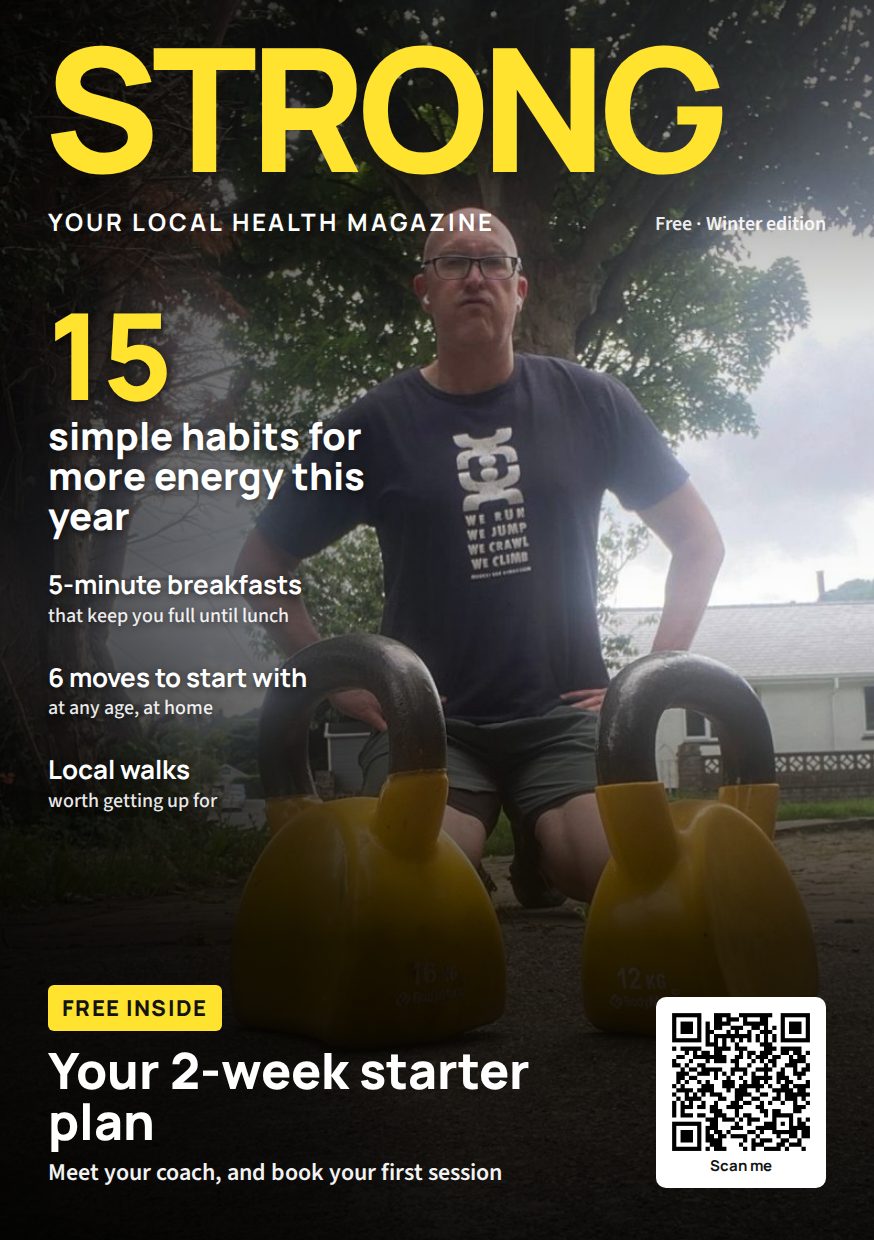
My best one was what I called the Magic Brochure: a sheet folded to A5, with a cover designed like a health magazine, about 15 simple tips inside, and the offer on the back. More on that below.
My latest versions run to 12 or 14 A5 pages, with men's and women's editions. What goes in one:
- A magazine-style cover with a clear headline and a real photo.
- About 15 short tips on eating, moving and sleeping well.
- A recipe or two and a simple one-week meal plan.
- A few basic exercises, with photos, that anyone can do at home.
- The offer on the back: what's included in your starter package, and how to book.
Check every tip against current guidance before you print. Some advice in my early versions, such as eating little and often to "boost your metabolism", hasn't stood up to newer research. And leave out promises like "lose 3kg every 14 days".
To make print work today:
- Make it worth keeping. Useful tips, real photos and a clean design, so people take it home rather than leave it on the table.
- Add a QR code that leads to a simple sign-up page, so a printed copy grows your email list. Use a page just for print, so you can see how many come from it.
- Put it where your ideal members already wait or relax: cafés, hair and nail salons, physios, and businesses you have a relationship with. Ask first, and offer to display theirs too.
- Print a small run first, 100 to 200 copies. Check which places they disappear from, and restock those.
Make it about your partner's customers
The hardest part of print is persuading other businesses to display it. A flyer about your gym mostly helps you. So make something that helps their customers instead.
Take a good local running, cycling or triathlon shop. Design a postcard with the year's local events on the front, and a race-day checklist on the back: what to eat, what to wear, and how to warm up.
The shop gets something useful to hand its customers. Runners and riders keep it until race day. And your logo, with a QR code for "the 4-week race plan", brings them onto your list.
The same idea works with a physio (a back-to-exercise checklist), a nutrition store (a shopping list) or a running club (a beginner's first 5K plan). Keep your branding and call to action clear, but low-key.
Then send emails about that topic, not general gym news. Someone who picked up a race calendar wants race advice first. Tag them by where they came from, so you know which partners bring in leads.
Canva makes the design simple, and the January Campaign Kit includes an eight-page guide you can brand and print.
Scorecards and quizzes
An online scorecard or assessment asks a few questions and gives each person a personal result, such as "Your strength score" or "How ready are you to get back into training?"
They work well because people enjoy learning about themselves, and the answers tell you who's interested and what they need. Daniel Priestley's ScoreApp (opens in a new tab) has templates for health and fitness businesses.
A scorecard tends to beat a fun personality quiz. A quiz is easy to share, but it can attract people who'll never become members.
I saw this at Predictable Success (opens in a new tab), where I worked with Les McKeown. His leadership styles quiz brought in plenty of the right people. But many businesses also used it to assess job applicants, so a lot of sign-ups weren't potential clients.
The lesson: ask questions only your ideal member would care about, and tag people by their answers, so you can tell the right leads from the rest.
Prize draws and gift cards
Prize draws bring in lots of names quickly. In Perth, we put lead boxes on café and coffee shop counters: people dropped in a slip or a business card, and each month one winner got three months of boot camp free.
It brought in leads, but not all of them were good ones. Free prizes attract people who like free things, not only people who want to train.
If you run one, make the prize something only your ideal member would want, such as a coached starter program, not a tablet or a hamper. And follow up with value, not just a discount.
Gift cards are another old favourite. At my boot camps, I used a plastic £50 gift card, and I helped a personal training studio do the same with a £75 card for a goal-setting and taster session.
Members gave them to friends, so every card came with a personal recommendation. That still works. Today I'd add a QR code to book online, and keep the card simple.
One thing I wouldn't repeat: our old cards promised weight-loss results in the first week. Promises like that attract the wrong people, and they can break advertising rules. Offer an experience and a plan instead.
After someone signs up
The lead magnet gets the email address. What happens next decides whether anyone joins.
- Deliver it straight away, by email, with a warm, personal note. This first email is usually the most opened one you'll send.
- Send three to five helpful emails over the next couple of weeks: a story, a tip, a member's progress, and what a first session looks like.
- Then invite them in, with a clear starter offer and an easy way to book.
- Keep them on your list for your regular newsletter if they're not ready yet. Many will join months later.
Tag each person with the lead magnet they chose, so you know what they're interested in. Ask for clear permission to email them, and only send what they signed up for. Email marketing for gyms covers the consent rules.
If anyone replies or asks a question, treat it as an enquiry. The lead follow-up mistakes article shows what to do next.
Where lead magnets fit
A lead magnet is one of several free things people can explore before they're ready to join, alongside your posts, videos, reviews and events. Daniel Priestley calls this a marketing playground.
The more useful things you give away, the more likely people are to land on your list and stay there. Mention your lead magnet in your posts, on your website, in your email signature and on printed pieces.
Paid ads can help, but they're the fuel on the fire, not the fire itself. Build a lead magnet and follow-up that work for free first, then use ads to reach more people.
What to measure
- Sign-ups: how many people downloaded it each month, and where they came from.
- Sign-up rate: of the people who visited the page, how many signed up. A low rate usually means the title or the promise isn't clear enough.
- Bookings: how many sign-ups booked a first session or a call.
- New members: how many joined within three months.
The last two matter most. A lead magnet with 50 sign-ups and five new members beats one with 500 sign-ups and none. Track them in the free tracker from turning enquiries into members.
Questions owners ask
What is a good lead magnet for a gym?
Something that solves one small, specific problem for the people you want as members, and can be used in a few minutes: a one-page plan, a short routine, a habit guide or a scorecard. Specific beats general.
What is a micro magnet?
A short, focused lead magnet that solves one small part of a bigger problem quickly, such as five quick high-protein breakfasts instead of a full nutrition guide. The idea is popularised by business coach Taki Moore.
Do printed lead magnets still work for gyms?
Yes, especially for local businesses. A well-designed printed guide stands out because few gyms do it. Add a QR code to a sign-up page so printed copies grow your email list.
Are quizzes good lead magnets?
They can be, but a scorecard or assessment usually works better than a fun personality quiz. Ask questions only your ideal member would care about, and tag people by their answers.
What should happen after someone downloads a lead magnet?
Deliver it straight away by email, send three to five helpful emails over a couple of weeks, then invite them to a starter offer. Keep them on your newsletter if they aren't ready yet.
How do I know if my lead magnet is working?
Track sign-ups and, more importantly, how many sign-ups book a first session and join within three months. A smaller number of the right people beats a large list of the wrong ones.

Found this useful? Share it with another owner.
I've spent 25 years in the fitness industry: on the gym floor, running my own boot camps and coaching gym and studio owners since 2012, including leading NPE Fitness's UK and European coaching team. I help independent gyms and studios get and keep more members.