

Mastering Personal Trainer Client Conversion is the difference between a struggling fitness business and a scalable asset.
Are you still chasing leads like it’s 2018—only to realise the real problem starts after someone messages you?
Here’s what you’re probably still doing:
- Replying to enquiries whenever you finish a session.
- Trying to “sell” in the DMs without a real process.
- Quoting hourly prices instead of packaging outcomes.
- Following up once—then convincing yourself you were being pushy.
And here’s what that creates:
- Ghosted leads and empty consultation slots.
- Low close rates and constant price objections.
- A business that depends entirely on your daily hustle.
- Revenue that stalls even whilst your effort keeps climbing.
Most personal trainers and gym owners are suffering from a “Leaky Bucket” syndrome. You spend hours on Instagram, hundreds on Meta ads, and a fortune in emotional energy trying to FIND new clients.
But here is the cold, hard truth: Getting the lead is only 10% of the battle.
If you don’t have a systematic way to START the client relationship, you aren’t building a business, you’re just expensive lead generation for your competitors.
In this guide, I’m going to show you how to move from manual effort to predictable systems.
We’re moving away from the “hope and pray” sales model and installing the START pillar of the Growth Engine OS™ into your fitness business.
This is the shift from Workhorse to Growth Architect.
Not more hustle.
More structure.
Depending on your stage, that might mean fixing your first consultation process as a PT, tightening local sales systems as a studio owner, or standardising conversion across multiple sites as a franchise operator. One engine → multiple vehicles.
The Leaky Bucket: Why Your Fitness Enquiries Go to Die
Here is what’s happening in 90% of fitness businesses right now:
- You get a DM or an email enquiry.
- You reply manually whenever you have a “free minute” between sessions.
- The prospect doesn’t answer.
- You follow up once, feel “pushy,” and then give up.
- You blame the “quality” of the leads.
STOP blaming the leads, START fixing the system.
When you operate without a Personal Trainer Client Conversion system, you are essentially pouring water into a bucket full of holes. You don’t need more water; you need to plug the holes.
According to sales psychology, only 3% of your market is ready to buy right now, whilst 40% are open to it but need nurturing. If your “system” consists of one manual email, you are ignoring 97% of your potential revenue.
If you don’t have a structured follow-up process, you are effectively throwing money into a furnace.
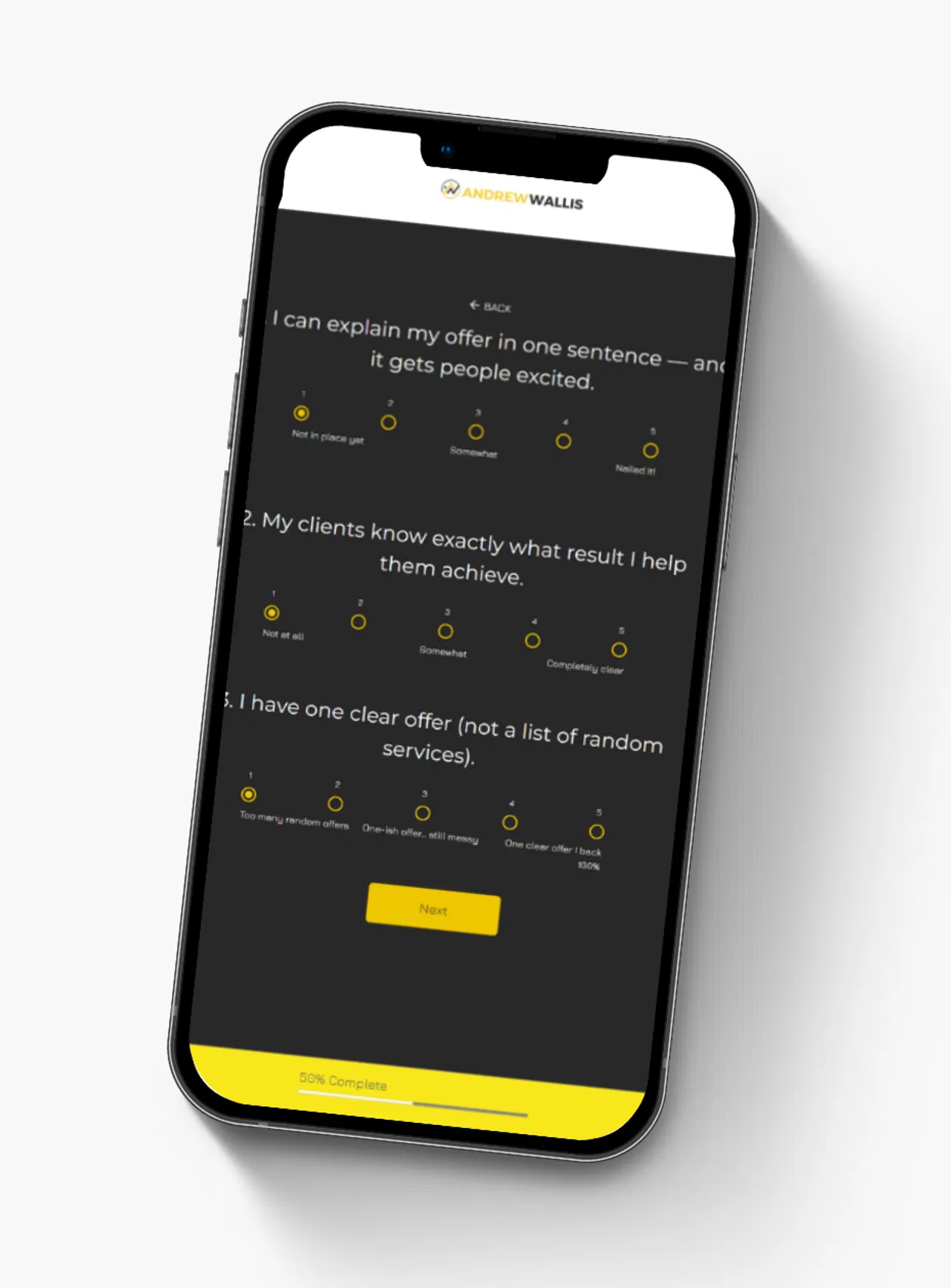
To understand where your bucket is leaking, you need a diagnostic. Before we dive into the frameworks, take two minutes to run your numbers through the Growth Engine Scorecard. It will tell you exactly which pillar of your business is failing.
The Mindset Shift: From Workhorse to Growth Architect
Most trainers are Workhorses. They believe that if they just work harder, grind more, and send more manual DMs, they will eventually win.
Not anymore.
In the modern fitness economy, the Growth Architect wins. The Architect doesn’t “work” the sales process—they build a system that works the sales process for them.
The Workhorse Mindset:
- Sells sessions by the hour.
- Handles every enquiry manually.
- Views sales as an “uncomfortable” necessity.
- Relies on personality and “vibe” to close.
The Growth Architect Mindset:
- Sells outcomes and transformations.
- Uses Fitness Sales Systems to automate the heavy lifting.
- Views sales as a diagnostic service for the client.
- Relies on a repeatable framework to close.
Here’s the real shift: the Workhorse thinks sales is about persuading people.
The Growth Architect knows sales is about clarifying the problem, increasing certainty, and guiding the right person to a decision.
That changes everything.
When you sell hours, you sound like everyone else.
When you sell outcomes, you become the obvious choice.
When you rely on motivation, your conversion becomes inconsistent.
When you rely on process, your conversion becomes measurable.
Moving from Effort to Systems is the only way to scale past £5k per month without burning out.
If you want a fast diagnosis of where you’re still acting like the Workhorse, use the Growth Engine Scorecard. It will show you whether the leak is response speed, consultation quality, follow-up, or offer positioning.
Why Fitness Sales Psychology Matters More Than Your Pitch
Most trainers think they have a sales problem.
Usually, they have a perception problem.
Your prospect is not asking, “How many sessions do I get?”
They’re asking, “Can you help me become the person I want to be?”
That’s why weak sales conversations sound like this:
- “I do one-to-one PT at £50 an hour.”
- “I can train you three times per week.”
- “I’ll build you a programme and nutrition plan.”
And strong sales conversations sound like this:
- “We help busy professionals lose their first 10kg without living in the gym.”
- “We help mums rebuild confidence and energy after years of stop-start dieting.”
- “We help studio members become consistent again with coaching, accountability, and structure.”
Selling outcomes, not hours
Here’s the problem: hours are a commodity. Outcomes are a transformation.
Nobody truly wants:
- Three PT sessions per week
- A PDF plan
- A calorie target
- Access to your app
They want:
- Confidence
- Energy
- Momentum
- Clothes that fit again
- Control over their habits
- A body and identity they recognise
That is what people buy.
Yes, they need training.
Yes, they need programming.
Yes, they need accountability.
But they buy the result those things create.
Why “selling outcomes” increases conversion
When you sell hours, prospects compare you to every other trainer in town.
When you sell outcomes, they compare you to staying stuck.
That is a completely different decision.
Here’s what’s happening psychologically during a consultation:
- They are trying to avoid risk.
- They are trying to justify the investment.
- They are trying to believe change is possible for them.
- They are trying to decide whether they trust you enough to lead them.
Your job is not to pressure them.
Your job is to increase certainty.
The four psychological drivers behind fitness sales
1. Pain
People move faster away from pain than toward abstract goals.
“Tone up” is vague. “Stop hiding in baggy clothes by summer” is emotionally real.
2. Desire
Your prospect wants a future identity.
Not a meal plan. A different version of themselves.
3. Proof
They need evidence that your process works.
That is why case studies, stories, and before-and-after context matter so much.
4. Certainty
They must believe your system is designed for someone like them.
Not for “super motivated people.” For them.
This is exactly why the START pillar matters. FIND generates attention. START converts attention into trust, appointments, and paid clients.
If your messaging still sounds like a menu of sessions, your conversion will stay weak. Use the Growth Engine Scorecard to see whether your sales psychology is helping or hurting you.
The Lead-to-Consultation Workflow: What Should Happen After An Enquiry
Here’s where most fitness businesses fall apart: a lead comes in, and then everything becomes manual, delayed, and messy.
That is the Workhorse model.
The Growth Architect model is different.
Every lead moves through a defined workflow.
Step 1: Lead capture
A lead comes from Instagram, Facebook, Google, your website, referral, lead magnet, or local search.
Your goal is simple:
- Capture their name and contact details
- Record the source
- Tag the enquiry type
- Trigger an instant response
No lead should live only in your DMs.
That is not a system. That is a memory test.
Step 2: Instant acknowledgement
Within five minutes—ideally instantly—the lead should receive:
- A confirmation message
- A clear next step
- A reason to stay engaged
Example:
“Thanks for reaching out—I’ve got your enquiry. The next step is to book a quick consultation so we can see exactly what you’re struggling with and whether we’re the right fit. Here’s the link.”
This removes uncertainty fast.
Step 3: Qualification
Before the consultation, you want basic context:
- Primary goal
- Current challenge
- Urgency
- Commitment level
- Any obvious deal-breakers
This can happen through a short form, message exchange, or pre-call questionnaire.
The point is not to interrogate them.
The point is to stop taking random, unstructured calls.
Step 4: Consultation booking
Give them one clear booking path.
Not:
- “Let me know when suits.”
- “I’m free most evenings.”
- “Just DM me and we’ll sort it.”
Instead:
- Use a booking link
- Offer specific slots
- Confirm the appointment immediately
- Send calendar reminders
The easier it is to book, the more people book.
Step 5: Pre-consultation nurture
Between booking and showing up, your system should increase belief and reduce no-shows.
Send:
- A welcome message
- A short story or case study
- A reminder of what will happen on the consultation
- A confirmation message 24 hours before
- A same-day reminder
This is where your CRM becomes your best employee.
Step 6: Consultation delivery
Run the same framework every time.
Don’t freestyle. Don’t “see how it goes.”
A repeatable consultation creates:
- Higher close rates
- Better confidence
- More accurate follow-up
- Cleaner data across your pipeline
Step 7: Post-consultation follow-up
If they do not buy on the call, the process is not over.
Your next actions should already be decided:
- Day 0: Summary + next step
- Day 1: Clarify the sticking point
- Day 3: Share a relevant proof story
- Day 5: Revisit the cost of inaction
- Day 7: Invite a decision or future check-in
That is not being pushy.
That is being professional.
The Lead-to-Consultation workflow in one view
| Stage | What the Workhorse does | What the Growth Architect does |
|---|---|---|
| Lead arrives | Checks phone later | Triggers instant response |
| Contact capture | Leaves it in DMs | Logs it in CRM |
| Qualification | Asks random questions | Uses a standard intake |
| Booking | Goes back and forth manually | Sends direct booking link |
| Show-up process | Hopes they attend | Uses reminders and nurture |
| Consultation | Wings it | Uses the Perfect Consultation |
| Follow-up | Sends one message | Runs a structured sequence |
If you want this mapped out for your business, start with the Growth Engine Scorecard. It will tell you where your Lead-to-Consultation workflow is breaking down.
The Perfect Consultation Framework: How To Convert Without Feeling Pushy
If you are still selling “blocks of 10 sessions,” you are competing on price. And in a price war, the only winner is the one who goes bankrupt last.
The Perfect Consultation framework shifts the focus from “what you do” to “what they get.”
This is a core component of the Andrew Wallis Consultancy methodology.
Step 1: Set the frame
Start with confidence.
Tell them what is going to happen:
- You’ll understand their goal
- You’ll look at what’s stopping them
- You’ll decide whether there’s a fit
- If there is, you’ll show the next step
This lowers pressure because the call has structure.
Step 2: The Movement Assessment (The “Hook”)
Don’t just talk. Show them. Spend 10 minutes showing them something about their body that YouTube or a generic app could never tell them. This establishes immediate high-status authority.
They should leave this moment thinking:
“This person sees what I’ve missed.”
Step 3: The Goal/Pain Discovery (The “Why”)
Ask deeper questions:
- Why now?
- What have you already tried?
- What is this costing you physically, emotionally, or socially?
- What happens if nothing changes over the next six months?
You aren’t looking for “I want to lose weight.” You are looking for:
“I’m tired of starting over every Monday.”
“I avoid photos.”
“I feel embarrassed walking into the gym.”
That is where buying decisions come from.
Step 4: The Gap Analysis
Show them where they are now (Point A) and where they want to be (Point B). Then explain what is missing in between.
This is the moment where your service becomes the logical bridge.
Not magic.
Not hype.
A clear plan.
Step 5: Present the solution
Now you prescribe.
Stop selling time. Sell the result.
Instead of:
- “It’s £50 an hour.”
Say:
- “The 12-week Body Transformation System is £1,500 and includes coaching, programming, accountability, and nutrition support designed to get you to [Goal].”
That sounds different because it is different.
Step 6: Confirm the decision
Ask a direct question:
- “Based on everything we’ve discussed, does this feel like the right next step for you?”
You do not need weird closing tricks.
You need leadership.
Step 7: Handle objections like a professional
Objections are rarely random.
They usually fall into a few predictable buckets.
That means you can prepare for them.
Objection Handling: Money, Time, and Partner Concerns
Most trainers panic at objections because they hear them as rejection.
That’s the wrong frame.
An objection usually means one of three things:
- They need more certainty
- They need help processing the decision
- They are interested but not yet convinced
Here’s how to handle the big three.
Objection 1: “It’s too expensive” / Money
Here’s what not to do:
- Discount immediately
- Start justifying your prices nervously
- Offer random cheap options to save the sale
Instead, slow down and diagnose.
You can say:
“I understand. When you say expensive, do you mean it’s not a priority right now, or that you’re unsure the result is worth the investment?”
That question matters because “money” is often a smokescreen for uncertainty.
Then continue:
“That’s exactly why we build this around a clear outcome. You’re not paying for hours in the gym—you’re paying for the structure, accountability, and coaching that gets you to [desired result] faster and with less guesswork.”
If needed, revisit:
- The cost of staying stuck
- The time and money already wasted
- Why your system is different from what they’ve tried before
Do not become defensive.
Become clear.
Objection 2: “I don’t have time” / Time
This objection is almost never about literal hours.
It usually means:
- They fear they won’t stay consistent
- They believe results require a lifestyle they can’t maintain
- They are overwhelmed already
You can say:
“That makes sense. Usually when someone says they don’t have time, what they really mean is they’re worried this will become one more thing they fail to keep up with. Is that fair?”
That invites honesty.
Then explain:
“Our job is to make this fit real life—not the fantasy version where you train six days a week and meal prep like an influencer. We build the plan around your schedule so you can actually sustain it.”
Time objections shrink when the prospect sees a path that feels realistic.
Objection 3: “I need to speak to my partner” / Partner
Again—don’t get reactive.
This objection often means:
- They need emotional reassurance
- They are avoiding making a decision alone
- They aren’t fully certain yet
You can say:
“Of course. What part do you think your partner will want you to think through most carefully?”
This is powerful because it reveals the real issue.
If they mention money:
“Totally fair. Let’s make sure you feel clear on the value first, so if you do speak with them, you can explain exactly how this helps you get the result you want.”
If they mention logistics:
“Let’s look at how this would fit your week so you can have that conversation clearly.”
And if it truly is a partner decision, agree the next step:
“No problem—why don’t we book a quick follow-up for tomorrow so you’ve got time to speak together and we don’t lose momentum?”
That keeps the process moving.
The rule for all objections
Never fight the objection.
Clarify it.
Never rush to defend.
Increase certainty.
Never collapse your pricing too quickly.
Reinforce the value of the outcome.
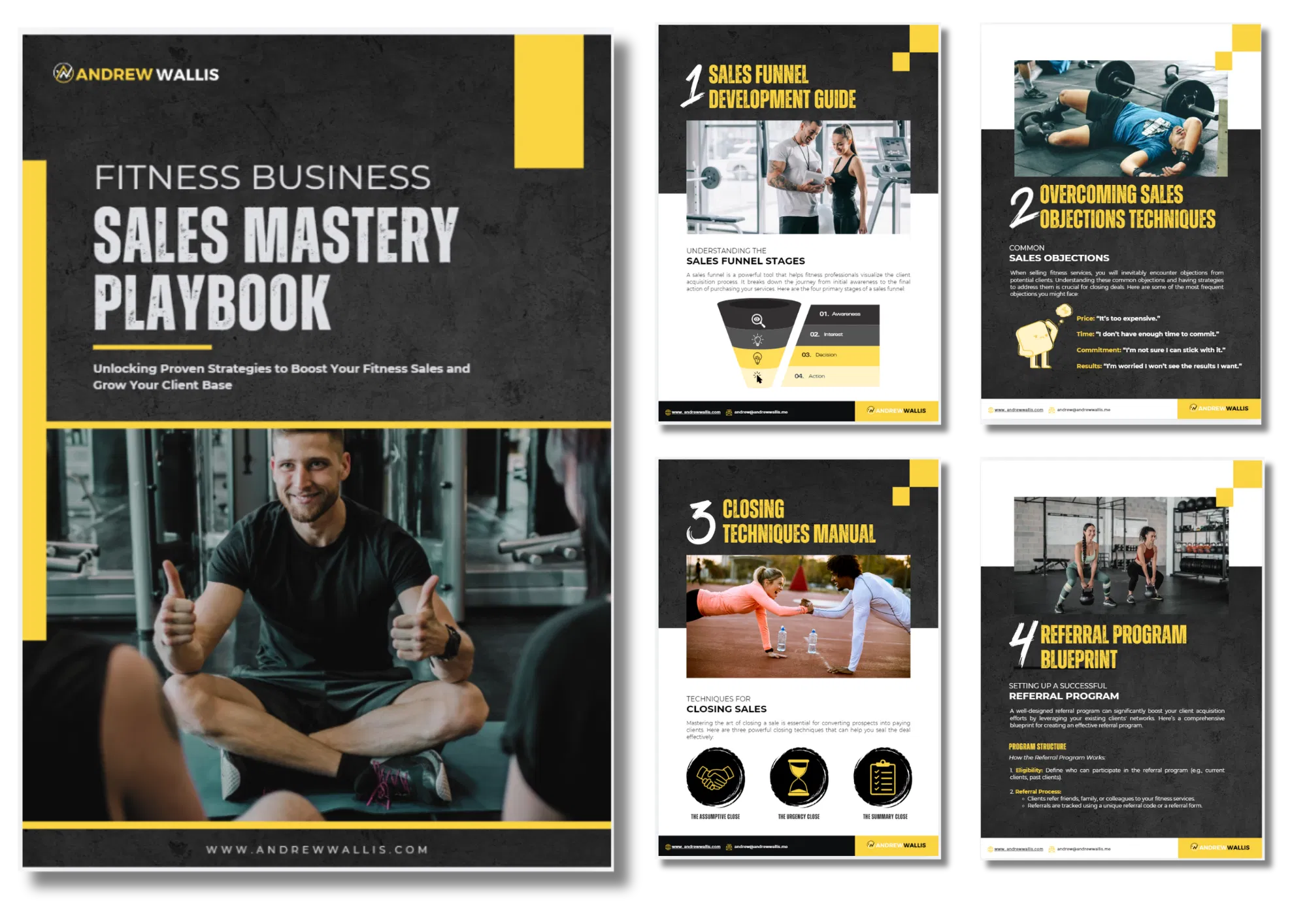
If objections are killing your close rate, that is a systems issue—not a talent issue. Use the Growth Engine Scorecard to see where your consultation process is leaking.
As Michael Gerber points out in The E-Myth, your business should be a system so that you can produce a consistent result every single time, regardless of who is performing the task. Your sales process is no different.
The Sales Pipeline Stages: How To See Conversion Like A Business Owner
If your pipeline lives in your head, you do not have a pipeline.
You have chaos.
A real sales pipeline shows you exactly where leads are moving, stalling, or disappearing. That is how the Growth Architect operates.
Stage 1: New Lead
This is anyone who has just entered your world and raised their hand.
Examples:
- Sent a DM
- Filled in a website form
- Clicked through from a lead magnet
- Asked about membership, PT, or coaching
Goal: respond instantly and move them to qualification.
Stage 2: Contacted
They have received a response and you have started communication.
Goal: confirm interest and guide them to the next action.
Stage 3: Qualified
You know they have:
- A relevant goal
- A real problem
- A level of urgency
- A realistic fit for your service
Goal: invite the right people to book.
Stage 4: Consultation Booked
They have committed to a time.
Goal: maximise show-up rate with reminders, authority content, and clear expectations.
Stage 5: Consultation Completed
You have delivered the consultation and presented the solution.
Goal: move them to decision, payment, or structured follow-up.
Stage 6: Proposal / Decision Pending
They are interested, but haven’t committed yet.
Goal: handle the real objection, not the surface-level excuse.
Stage 7: Won
They have paid and become a client.
Goal: handover smoothly into onboarding so sales momentum turns into retention.
Stage 8: Lost / Nurture
They did not buy now.
That does not mean they are dead.
It means they move into nurture.
Goal: stay visible, stay useful, and create future conversion opportunities.
Why pipeline stages matter so much
When you track stages properly, you can finally answer questions like:
- How many leads are we generating each week?
- How many are actually qualified?
- How many consultations are getting booked?
- How many booked calls are showing up?
- How many consultations convert into paying clients?
- Where exactly are people dropping off?
That is how you stop guessing.
The START pillar is not just “sales”
It is:
- Response speed
- Qualification
- Booking
- Show-up rate
- Consultation quality
- Objection handling
- Follow-up
- Pipeline visibility
That is why START is the bridge between marketing and revenue.
Without START, FIND becomes expensive.
With START, FIND becomes profitable.
The Mechanism of Follow-up: Why Your CRM is Your Best Employee
The fortune is in the follow-up. We’ve all heard it, but almost no one does it.
Why? Because manual follow-up is exhausting. This is where Fitness Sales Systems and automation become your secret weapon. You need a “Mechanism” that ensures no lead is ever forgotten.
Manual effort doesn’t scale. Systems do.
The 24-Hour Rule
If a lead reaches out, they should receive a response within 5 minutes, even if it’s 2 AM. How? Automation. An automated SMS or Email sequence should trigger immediately, offering value and a call to action (CTA).
The Multi-Channel Approach
Don’t just email. People live on WhatsApp, SMS, and Instagram.
A true Growth Engine OS™ setup uses a CRM to track these conversations in one place, ensuring that a “no” today is just a “not yet” for tomorrow. If you want a tactical recommendation to fix the Leaky Bucket, use Hapana as your CRM of choice—it gives you one place to manage conversations, pipeline stages, follow-up, and visibility without the usual mess.
The “Leaky Bucket” Fix
Create a 7-day “Indoctrination Sequence.” If they don’t book a consult immediately, your system should automatically send them:
- Social Proof (Case studies).
- Educational Content (How to fix [Pain Point]).
- The “Check-in” (A low-pressure nudge to book).
For the automated nurture side of that sequence, Kit is a strong tactical choice. It makes it easier to deliver the right message at the right time, so leads don’t slip through the cracks whilst you’re busy coaching clients.
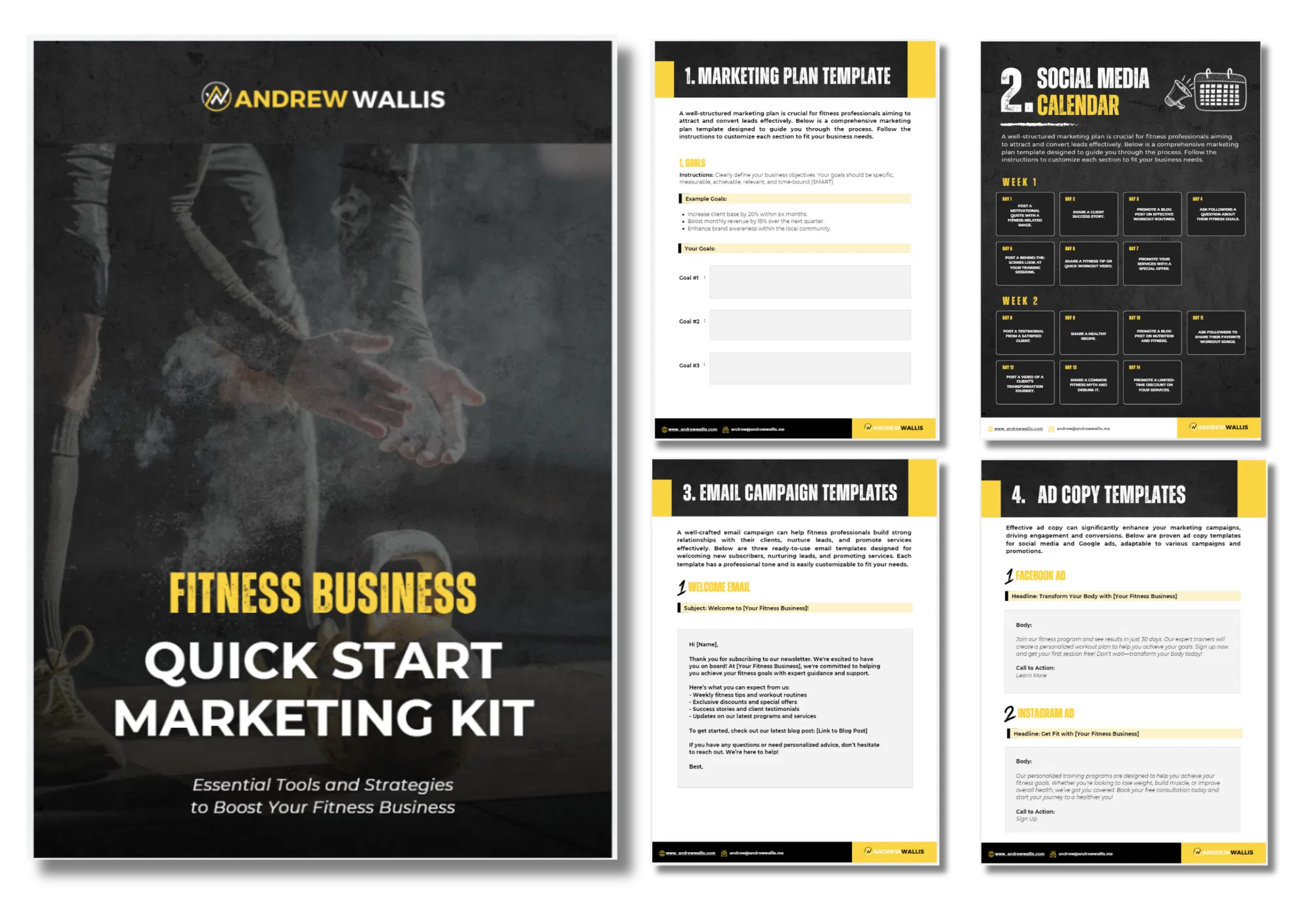
Get your systems organized. Grab the Fitness Business Quick Start Kit to see how we structure these workflows.
Manual Effort vs. Systematic Sales: The Comparison
| Feature | Manual Effort (The Workhorse) | Systematic Sales (The Architect) |
|---|---|---|
| Enquiry Response | Whenever you check your phone. | Instant, automated trigger. |
| Lead Tracking | Mental notes or a messy notebook. | Centralized CRM with pipeline stages. |
| Sales Pitch | Different every time based on “vibe.” | Structured “Perfect Consultation” script. |
| Follow-up | “Did I message that guy back?” | Automated 7-day nurture sequence. |
| Pricing | Discounting to “get the win.” | Fixed, value-based package pricing. |
| Outcome | Burnout and inconsistent income. | Scalable, predictable growth. |
How to Implement the START Pillar Today
You don’t need a massive marketing budget to fix your conversion. You need a decision to stop being a “trainer” and start being a business owner.
Step 1: Audit your funnel
Where are you losing people? Use the Growth Engine Scorecard to find the exact gap.
Step 2: Script your Lead-to-Consultation workflow
Stop improvising. Write down:
- How enquiries are captured
- What happens in the first 5 minutes
- How leads qualify
- How consultations are booked
- How reminders are sent
- How follow-up happens after the call
If it only lives in your head, it will break.
Step 3: Script your Perfect Consultation
Stop “winging it.” Write down your consultation flow and stick to it.
Map:
- Your opening frame
- Your discovery questions
- Your gap analysis
- Your outcome-based offer
- Your objection handling responses
- Your closing question
Step 4: Install a CRM and visible pipeline
Move your leads out of your Instagram DMs and into a system that tracks their journey.
At minimum, you need stages for:
- New Lead
- Contacted
- Qualified
- Booked
- Completed
- Decision Pending
- Won
- Nurture
Step 5: Sell outcomes
Package your services. Raise your prices. Sell the result.
Because here’s the truth: if you continue to sell your time by the hour, you will always be a slave to your calendar.
Step 6: Think like the Growth Architect
The START pillar is not about becoming “salesy.”
It is about becoming systematic.
That is the whole shift:
- From chasing to tracking
- From hoping to measuring
- From manual effort to predictable sales
- From Workhorse to Growth Architect
At Andrew Wallis Consultancy, we don’t just give you “tips.”
We provide the Growth Engine OS™, a complete architectural blueprint for your fitness business. Depending on your stage, that might help you fix inconsistent enquiries, improve poor conversion, or remove owner-dependence from the sales process. But the system is always the same.
One engine, multiple vehicles.
FAQ: Personal Trainer Client Conversion
What is personal trainer client conversion?
Personal trainer client conversion is the process of turning an enquiry or lead into a booked consultation, a paying client, and eventually a retained customer through a repeatable sales system.
What is the best way to convert a lead?
The best way is to respond instantly via automation and move them into a structured Perfect Consultation that focuses on their emotional “why” rather than your technical “how.”
Why do leads ghost me?
Leads ghost because of a lack of perceived value, weak follow-up, or a delay in response. If you wait 4 hours to reply, their motivation has already dipped. Systems solve this by providing instant gratification and consistent follow-up.
What is selling outcomes instead of hours?
Selling outcomes instead of hours is positioning your offer around the transformation the client wants—fat loss, confidence, energy, consistency, accountability—instead of just quoting an hourly session rate.
What is a Lead-to-Consultation workflow?
A Lead-to-Consultation workflow is the step-by-step process that moves a prospect from initial enquiry to booked appointment using instant response, qualification, reminders, and pre-consultation nurture.
What is the Perfect Consultation framework?
The Perfect Consultation framework is a structured sales conversation that diagnoses the client’s problem, uncovers their emotional motivation, presents the gap between where they are and where they want to be, and prescribes the right coaching solution.
Why is objection handling important in fitness sales?
Objection handling is important because most prospects do not buy when they feel uncertain. Objections around money, time, and partner approval usually reflect missing certainty—not a lack of interest.
What is a sales pipeline for personal trainers?
A sales pipeline for personal trainers is a visual set of stages—such as New Lead, Qualified, Booked, Completed, Won, and Nurture—that shows where each prospect sits and where your conversion process is breaking down.
Do I need expensive software for a conversion system?
No. You need a functional CRM and a set of proven templates. It’s about the process, not just the tool.
What is the Growth Engine OS™?
It is my proprietary business framework designed to help fitness professionals move from manual hustle to systematic growth through three pillars: FIND, START, and GROW.
Who is this guide for?
This guide is for fitness professionals who want better conversion without more chaos—whether you’re a new PT, stuck at £2.5k–£5k per month, or running a studio or gym team that needs more consistent local client flow.
Are you ready to stop the manual grind?
Click here to take the Growth Engine Scorecard and see if your business is ready to scale.
About Andrew Wallis
Andrew Wallis is the Growth Architect for Fitness Businesses. Through Andrew Wallis Consultancy, he helps fitness businesses solve three core problems—inconsistent leads, poor conversion, and owner-dependence—by installing simple, proven systems inside the Growth Engine OS™. Depending on your stage, that can mean helping a PT fix their first sales process, helping a studio create consistent local client flow, or helping a franchise standardise conversion across locations. One engine → multiple vehicles. With over 25 years of industry experience, Andrew provides the blueprint to move from Workhorse manual effort to Growth Architect systematic sales.

