

The WHO Pillar: Why Fitness Business Positioning is Your Foundation for Scale
Are you still trying to be everything to everyone, wondering why your bank balance looks like a ghost town whilst your calendar is a frantic mess?
If you haven’t mastered fitness business positioning, you’re not building a business: you’re just a glorified freelancer with a very expensive hobby. Most trainers are terrified of “missing out” on clients, so they market to anyone with a pulse and a pair of trainers. That is the fastest way to stay broke.
Here is the reality of the generalist trap:
- You’re competing on price because you look like everyone else.
- Your marketing feels like shouting into a void.
- You’re exhausted from “hustling” for low-value leads.
- You have zero authority in a saturated market.
Stop the madness.
In this installment of the Growth Architect Blueprint series, we are diving deep into the WHO Pillar. This is the literal foundation of the Growth Engine OS™ hierarchy.
And here’s the uncomfortable truth: if you’re stuck in Level 1 (£0–£5k): Unstable Demand, your primary bottleneck is usually a missing WHO.
Not a better logo. Not a new reel. Not “posting more”.
It’s positioning.
Because without a niche, your marketing stays generic—and generic marketing creates inconsistent leads. One week you’re “busy”. The next week it’s tumbleweeds and panic-posting on Instagram.
The WHO Pillar is the diagnostic fix for Level 1 positioning failures. Get this wrong and the rest of your engine will stall, sputter, and eventually die.
Depending on your stage, the same engine applies—One engine → multiple vehicles. If you want the full roadmap, read the main pillar: Scaling a Fitness Business: The One Engine, Three-Stage Roadmap.
The Generalist’s Grave: Why “Everyone” is the Wrong Answer
Let’s be honest: you’ve probably been told that being a “versatile” trainer is a strength. It’s not. It’s a massive liability. When you claim to help “men and women lose weight, build muscle, fix their back pain, and prep for a marathon,” you end up helping nobody.
Fitness business positioning is about sacrifice. It’s about deciding who you are not for so that you can become the only logical choice for the people you are for.
Research actually backs this up. Studies on niche marketing show that businesses with a specialized focus can command higher prices and achieve higher levels of customer loyalty because they are perceived as experts, not commodities.
Here’s what’s happening instead:
You’re fighting an uphill battle against the big-box gyms and the celebrity influencers. You can’t outspend them, and you can’t out-muscle them. But you can out-position them.
Ready to see where your business actually stands? Stop guessing and start measuring. Get your score with the Growth Engine Scorecard to see if your positioning is holding you back.
The WHO Pillar: The First Stage of the Growth Engine OS
At Andrew Wallis Consultancy, we don’t believe in “random acts of marketing.” We believe in systems. The Growth Engine OS is built on the philosophy of “One engine -> multiple vehicles.” Whether you are a solo PT or a multi-location gym owner, the system is the same.
The WHO Pillar is the first gear in that engine.

Alt: fitness business positioning
What is the WHO Pillar?
It’s the granular identification of your ideal client. Not just “women over 40,” but “female executives over 45 in London who are struggling with perimenopause and have zero time for 2-hour gym sessions.”
When your positioning is that sharp:
- Your messaging becomes a magnet. Your ads stop being ignored.
- Your pricing becomes irrelevant. Experts don’t get haggled on price; generalists do.
- Your delivery becomes systematic. You solve the same problems for the same people, over and over.
Effort vs. Systems: The Scaling Secret
Most fitness professionals are stuck in a loop of High Effort, Low Scale.
You think that to grow, you need to work more hours. You think you need to “grind” harder. Wrong. Scaling isn’t about more effort; it’s about better systems.
When you have a narrow niche for personal trainers, you can build a system around that niche. If every client has a different goal, you have to reinvent the wheel every single time a new person signs up. That is owner-dependent and unscalable.
The Growth Engine Diagram shows us that once the WHO is defined, the rest of the engine (the WHAT and the HOW) can be automated.
- Without the WHO: You are manual labor.
- With the WHO: You are a Growth Architect.

Alt: fitness business positioning scorecard
How to Nail Your Fitness Business Positioning (Step-by-Step)
If you’re feeling like a commodity, it’s time to pivot. You don’t need a new logo; you need a new fitness business positioning strategy.
Step 1: Identify Your “Superpower” Client
Look at your current client list. Who do you get the best results for? Who do you actually enjoy working with? Who pays you without complaining? That’s your starting point.
Step 2: Solve a Specific, Expensive Problem
“Weight loss” is a generic problem. “Weight loss for post-pregnancy mums who want to fit back into their work suits before their maternity leave ends” is a specific, expensive problem. People pay for solutions to specific problems.
Step 3: Speak Their Language
Once you know the WHO, you need to use their words. Stop using “fitness jargon.” Use the words they use when they’re complaining to their friends over a glass of wine.
Need a hand with this? Check out the Fitness Business Content Marketing Playbook to learn how to turn your positioning into content that actually converts.
The “One Engine” Philosophy
I work with three types of people:
- Pathway 1: New & Struggling PTs who need to get their first 10-20 clients.
- Pathway 2: Trainers stuck at £2.5k–£5k who are trading time for money and hitting a ceiling.
- Pathway 3: Studio & Gym Owners who need to step out of the daily operations and lead.
Regardless of which pathway you are on, the WHO pillar is your starting point. You cannot build a multi-location franchise on “we help anyone.” You build it on a proven, repeatable model that serves a specific market segment.

Alt: fitness business positioning toolkit
Why Most Trainers Fail to Position Themselves
The number one reason? Fear.
You’re scared that if you focus on a niche for personal trainers, you’ll lose out on the 95% of the market that doesn’t fit that niche.
Here’s the reality you’re missing:
By trying to appeal to 100% of the market, you are appealing to 0% of the market. You are invisible. When you focus on 5%, you become the authority for that 5%. And in a world of billions, 5% is more than enough to build a seven-figure business.
Stop Guessing. Start Architecting.
You have two paths right now.
- Path A: Keep doing what you’re doing. Keep being the “nice” trainer who helps everyone but can’t pay the bills. Keep “hustling” until you burn out.
- Path B: Become a Growth Architect. Use the Growth Engine OS to define your fitness business positioning, build a system that attracts high-value clients, and finally scale your business.
The choice is yours. But the market in 2026 doesn’t have room for “average.”
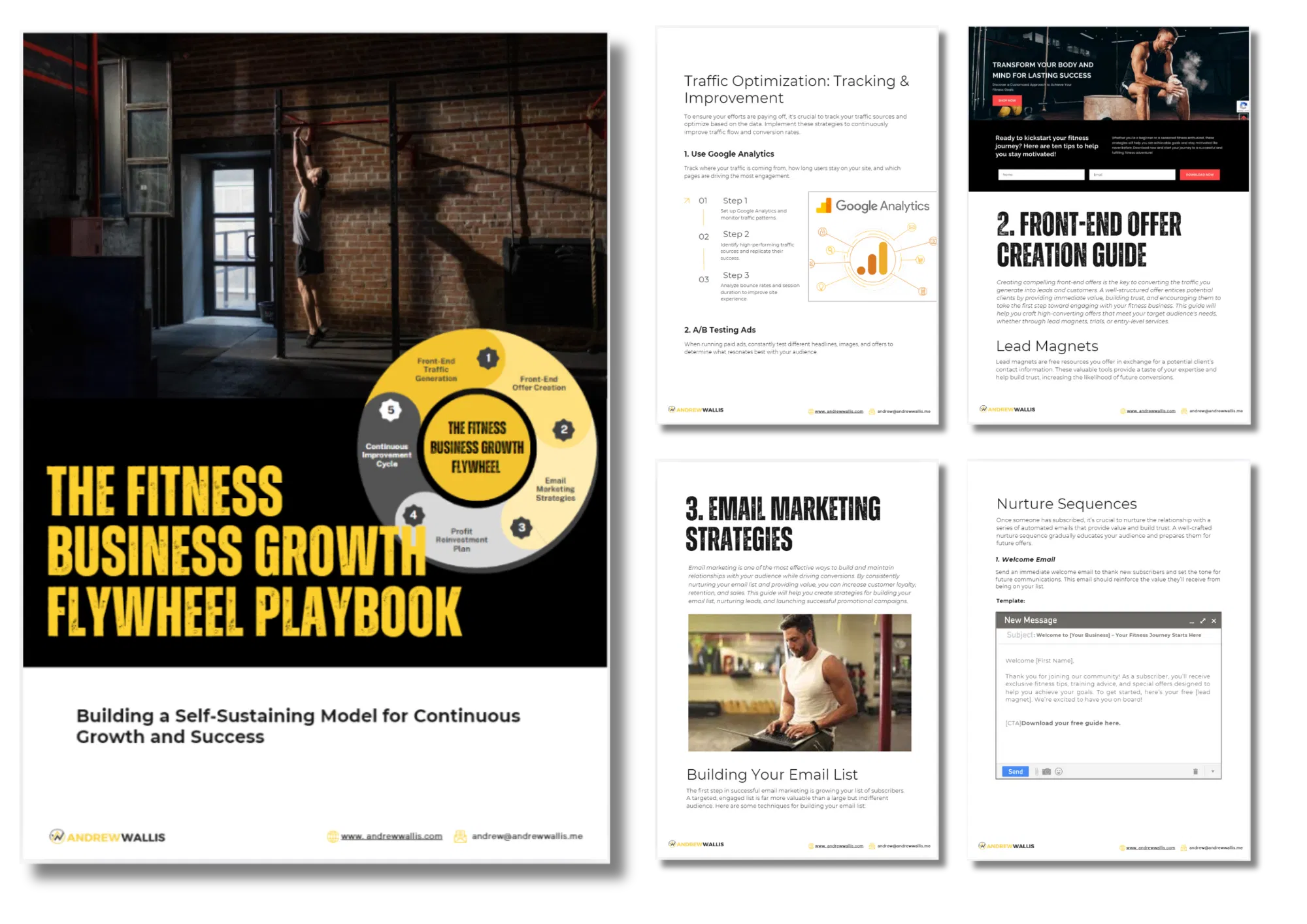
Alt: fitness business positioning flywheel
Summary Checklist for the WHO Pillar:
- Have you defined a specific demographic AND psychographic profile?
- Does your marketing address a specific, high-value problem?
- Could a stranger look at your website and know exactly who you are NOT for?
- Is your delivery systematic, or are you reinventing the wheel for every client?
If you checked “No” to any of those, your engine is broken.
Grab the Growth Engine Scorecard now and let’s find out exactly where the leaks are in your business.
FAQ: Literally Speaking
What is fitness business positioning?
Fitness business positioning is the process of defining a specific niche and unique value proposition that sets a gym or trainer apart from competitors. It’s about being the specialist for a specific group of people.
Why is the WHO pillar important?
The WHO pillar is important because it serves as the foundation for all marketing, sales, and service delivery. Without a clear “WHO,” your messaging is diluted, and your business remains unscalable.
How do I find a niche for personal trainers?
You find a niche by analyzing your best results, identifying high-demand problems in the market, and choosing a group of people you have the authority and desire to serve consistently.
What is the Growth Engine OS?
The Growth Engine OS is a systematic framework designed by Andrew Wallis Consultancy to help fitness businesses achieve predictable revenue through automated systems, moving away from owner-dependent manual effort.
About the Author
Andrew Wallis is a business growth consultant and the “Growth Architect” for fitness professionals. From solo PTs to large-scale gym owners, Andrew helps fitness entrepreneurs transition from the “hustle” to a systematic, predictable Growth Engine. With over two decades of experience, he’s seen it all: and fixed most of it.

